Richemont is cutting jobs at Montblanc. Six employees at the maison’s Swiss watchmaking operations have been made redundant, and seventeen more are being transferred to other positions within the group, according to reporting by Swissinfo that broke on October 9. The union's fuller account, as carried by SwissObserver, puts 23 employees in transfer discussions overall, with 17 moves being organised. The news agency AWP, citing the Unia Neuchâtel trade union, reports that some of the seventeen were offered positions at Cartier, while others agreed to move to the Minerva manufacture in Villeret. It is a small restructuring in absolute numbers. It is a large signal about where the Swiss watch industry’s recovery is not reaching.
The context is the number that has been hanging over Richemont’s watch division for two years. Watch Insider, reviewing the group’s accounts, puts the specialist watchmakers’ operating profit at 107 million euros in the most recent financial year, down from 738 million euros in 2022/23. That is a collapse of more than 85 percent in the division that houses Montblanc alongside Baume & Mercier, Piaget, and the group’s other non-jewellery watch brands. Group-level sales have kept growing, powered by the jewellery maisons. The watchmakers have not shared in it.
Montblanc sits at the exposed end of that division. The maison built its watchmaking credibility over two decades: the Le Locle manufacture for volume production, and the Villeret manufacture, the historic Minerva works dating to 1858, for high watchmaking, movement development, and hairspring production. The 1858 collection, with its Minerva-derived chronographs and world-timers, gave Montblanc a genuine manufacture story. But the brand’s watch business has always lived in the entry and mid-range segments that are currently the softest part of the Swiss market, squeezed between strong demand at the very top and the quartz and smartwatch pressure below.
The shape of the restructuring is as telling as its size. Richemont is not closing the watchmaking operation; it is reallocating its watchmakers. Moving staff to Cartier, the group’s powerhouse, and to the Minerva manufacture in Villeret suggests a triage: protect the high-watchmaking capability that gives Montblanc its credibility, and shift capacity toward the brands where demand is holding. The Villeret atelier, where a small team of artisans produces fewer than a thousand watches a year, is the part of Montblanc’s watchmaking that cannot be replicated or restarted once lost. Keeping it staffed while trimming elsewhere is the rational move, and it appears to be the move being made.
There is a human cost that the numbers do not capture. Six redundancies is a small figure next to the thousands employed across the Jura, but each represents a watchmaker or technician in a region where the industry is the economy. The seventeen transfers are the more interesting figure: internal mobility is how groups avoid redundancies, and the fact that Richemont found places for nearly three times as many people as it let go says something about where the group still needs hands. Cartier’s absorption of Montblanc watchmakers is, in its way, a compliment to their training.
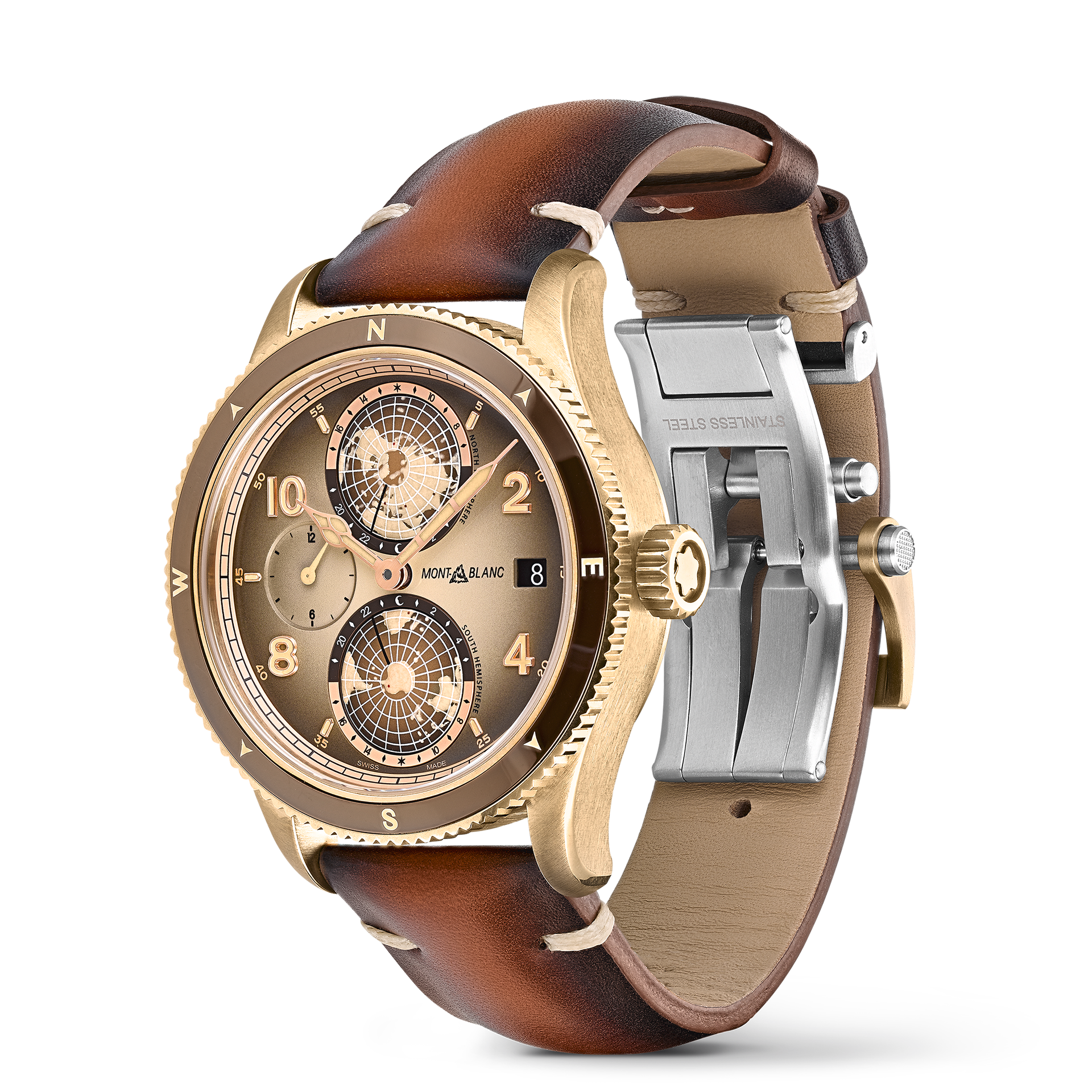
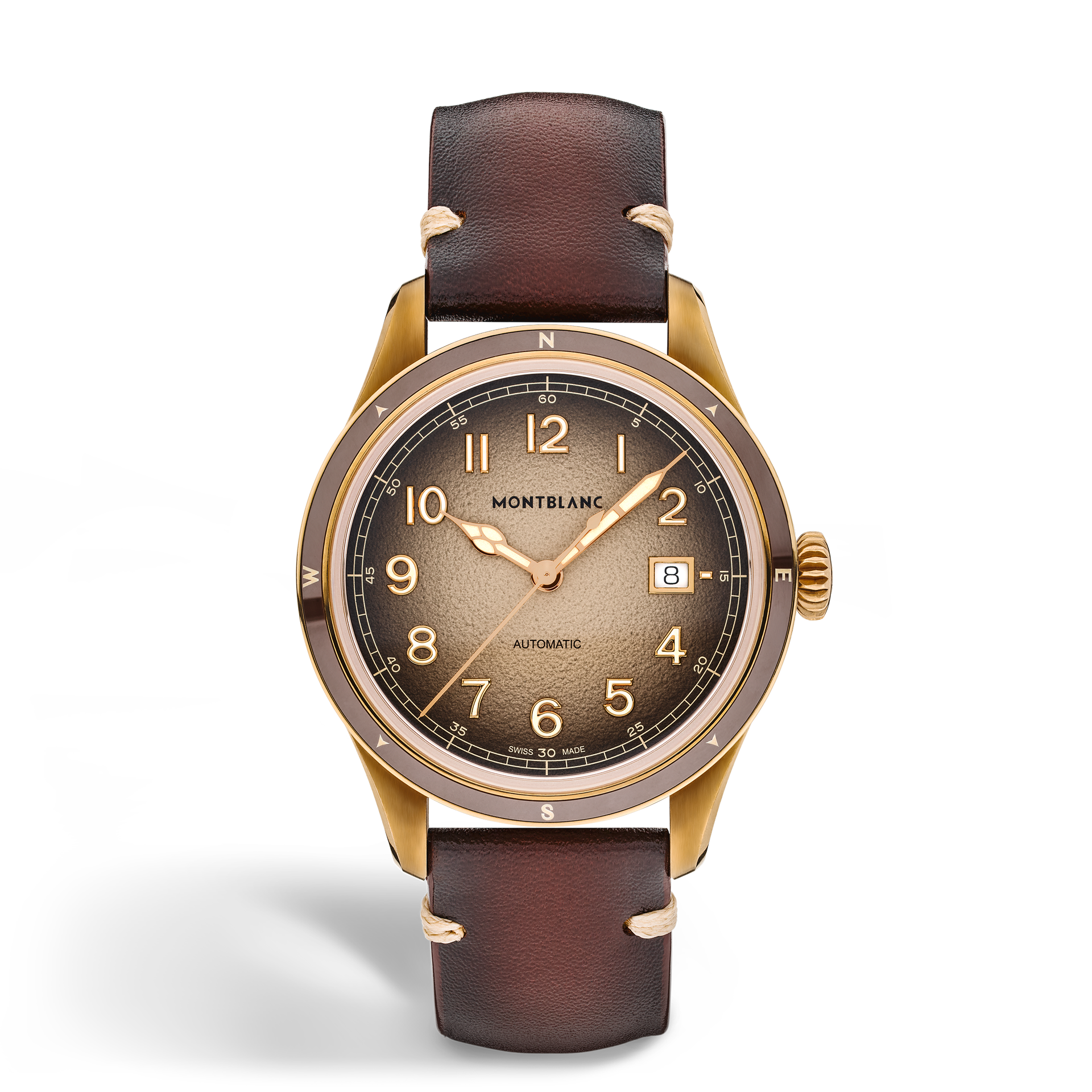
The broader picture is the one the Swiss industry has been reluctant to state plainly. Exports have been volatile, the American tariff situation has scrambled planning, and demand has polarized: the top of the market, complicated pieces from the great manufactures and the independents, continues to clear at auction and at retail, while the middle, watches between roughly three and eight thousand francs, faces the toughest conditions in years. Montblanc’s 1858 collection lives squarely in that middle ground. The 1858 Automatic Date, the Small Second, the GMT: well-made, honestly priced, Minerva-inflected watches that are precisely the kind of product a soft middle market punishes first.

None of this is a verdict on Montblanc’s watchmaking, which by most accounts has never been better. The Geosphere’s manufacture world-timer, developed in Villeret, remains one of the more interesting complications at its price. The problem is structural, not horological: a group whose jewellery profits can fund patience is choosing to exercise it selectively, and the watch division is where the patience is thinnest. The 107-million-euro operating profit is still a profit. But set against 738 million three years earlier, it reads as a division being managed for a different future than the one it planned for.
What happens next will be visible in the product. If Montblanc’s watch releases tilt further toward Villeret-made high watchmaking and away from the volume middle, the restructuring will have been a strategic repositioning dressed as a cost exercise. If the Le Locle lines thin out without a high-end replacement, it will have been a retreat. The transferred watchmakers, now at Cartier benches and Villeret ateliers, will be building the answer either way. This assessment is from published reporting on the restructuring and the group’s accounts; the staff moves were reported via the union and have not been the subject of a Richemont statement we have seen.