Two years after H. Moser & Cie. introduced its 30-second retrograde seconds on the Pioneer, the independent manufacture has promoted the complication to brand language. Announced on October 7 from Neuhausen am Rheinfall, three new references carry the display across all three of Moser's core collections: the Pioneer Skeleton Retrograde Seconds (ref. 3251-1200), the Streamliner Retrograde Seconds (ref. 6252-1200), and the Endeavour Retrograde Seconds (ref. 1252-1200). Same mechanism, same 40 mm steel case size, three entirely different watches.
The complication is worth describing precisely, because its theatricality is the point. Instead of a conventional seconds hand rotating once per minute, Moser's display sweeps a hand across a 30-second arc and then snaps it instantly back to zero, twice per minute. The mechanism uses a double snail cam in permanent contact with a finger, building tension in a hairspring mounted beneath the seconds hand axis; at the 30-second mark the accumulated energy releases at once. A two-tone disc beneath the snail indicates whether the watch is in the first or second half of the minute. It takes real energy to throw a hand backward twice a minute, every minute, and the brand has chosen to expose the apparatus rather than hide it: snail, rack, and hairspring are visible on the dial side.
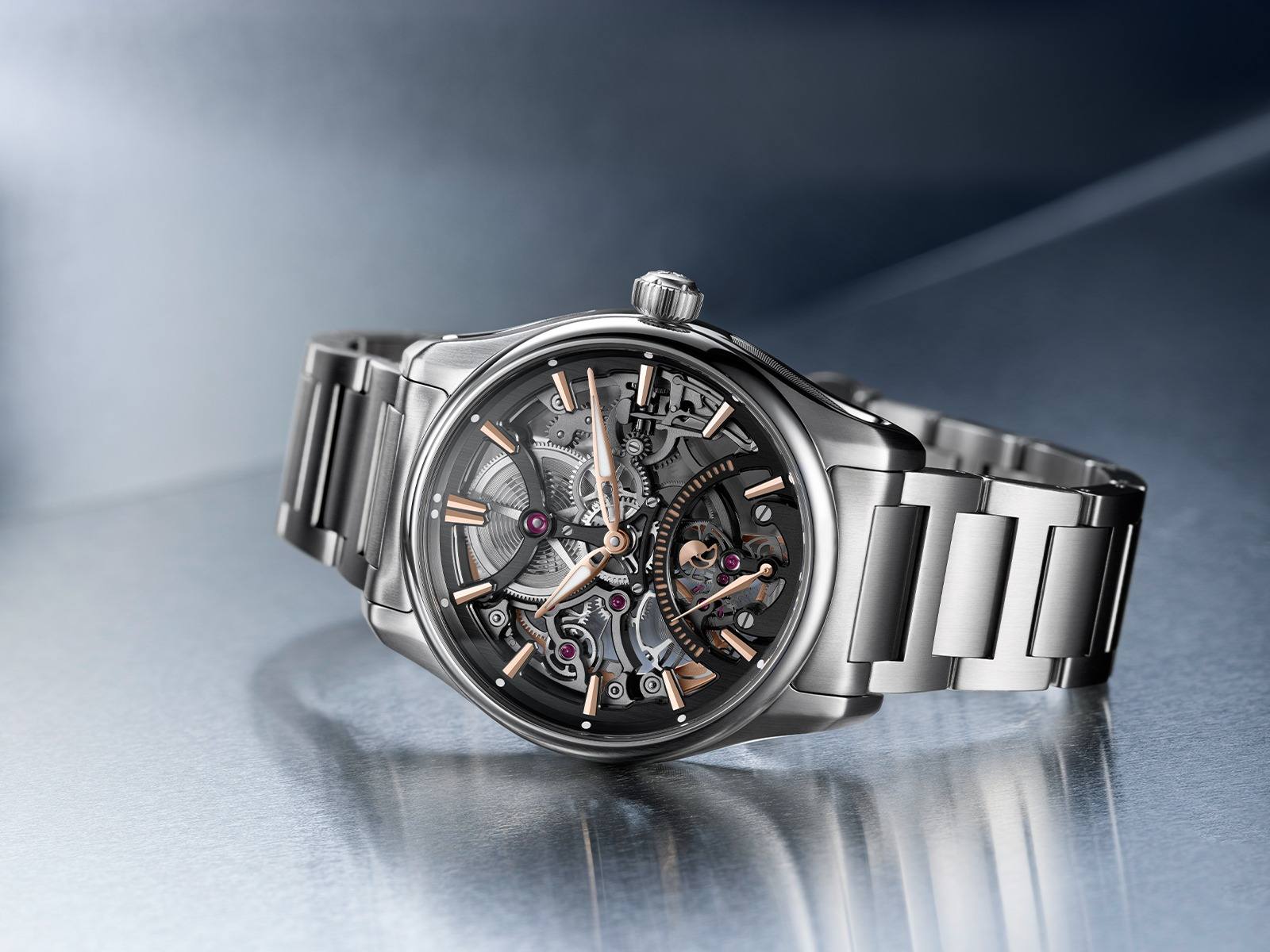
The Pioneer Skeleton is the most mechanically outspoken of the three. Its HMC 251 self-winding calibre is fully skeletonized, evolved from the HMC 250, with the retrograde mechanism developed in-house and integrated directly into the openworked architecture. Anthracite bridges and wheels contrast with gold-toned hands and markers, and the watch ships with both a steel bracelet and a khaki rubber strap. At 40 mm by 12 mm and rated to 12 ATM, it is the sport watch of the trio, and the skeletonization makes the retrograde action legible as pure mechanism. It is listed at CHF 37,726 including taxes, or 44,200 euros.
The Streamliner takes the same idea and smooths it into the collection's fluid, integrated design. Here the calibre is the HMC 252, which Moser's own product pages describe as supplied by Agenhor, the complications specialist in which Moser's holding company MELB acquired a minority stake in 2023. The display sits at 6 o'clock beneath a Midnight Blue fumé sunburst dial, the brand's signature gradient, with the logo rendered in transparent lacquer so as not to interrupt the flow. The snail cam sits beneath an openworked anthracite bridge. The 40 mm steel case and its integrated bracelet, 12.1 mm thick and rated to 12 ATM, make this the most cohesive object of the three: the sudden snap of the seconds hand interrupting an otherwise uninterrupted flow of brushed steel. Price: CHF 32,300 including taxes, or 37,800 euros.

The Endeavour is the surprise. Moser's dressiest collection is the last place one would expect a decidedly sporty complication, but the Blackor fumé dial, shifting between light and shade, gives the retrograde display an austere stage. The calibre is again the Agenhor-supplied HMC 252, and the brand's own product copy puts it well: a little mechanical theatre on an otherwise restrained dial. The 40 mm case is the slimmest of the three at 11.2 mm, water resistance drops to 3 ATM, and the watch comes on a night-blue nubuck alligator strap. At CHF 30,160 including taxes, or 35,300 euros, it is the entry point to the trio.
All three run at 21,600 vibrations per hour and carry a minimum three-day, 72-hour power reserve. That autonomy matters more than it might seem: a retrograde mechanism that fires twice a minute is an energy-hungry guest, and the reserve has to feed it without disturbing timekeeping. The original Pioneer Retrograde Seconds of two years ago proved the concept on a single model; spreading it across the full lineup is a statement that the concept has become the house style.
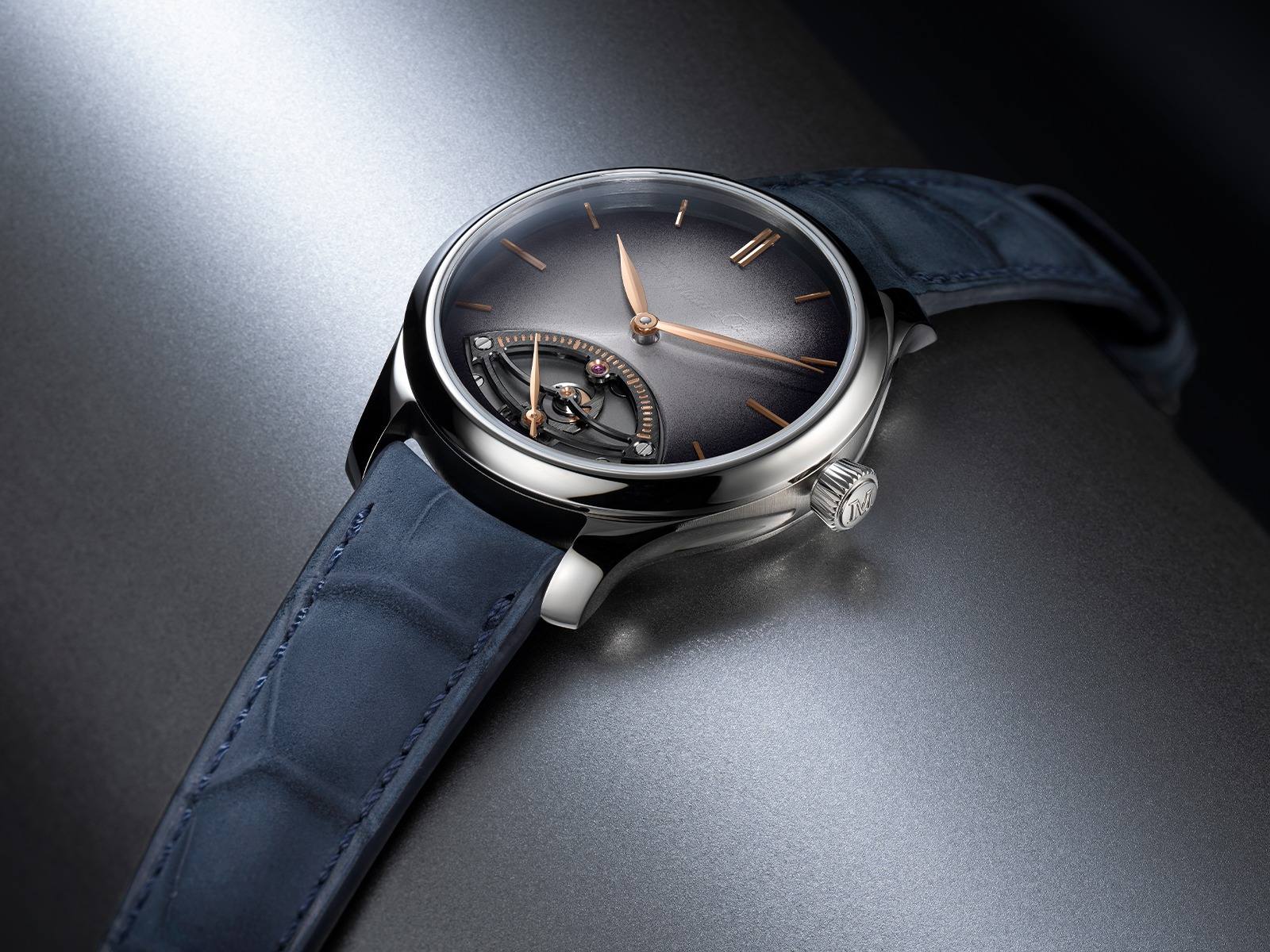
There is a meaningful technical distinction inside the trio that the launch materials handle honestly. The Pioneer Skeleton's HMC 251 integrates the retrograde mechanism as an in-house development, while the Streamliner and Endeavour use the HMC 252, a calibre Moser's own pages describe as supplied by Agenhor. Some early press coverage described all three as Agenhor-module watches; the brand's own product pages draw the line more carefully, and the line is worth drawing. It tells you where Moser's manufacture ends and its partnerships begin, which for an independent trading on manufacture credibility is exactly the kind of detail that matters.
We have not handled these watches; this assessment is from the brand's published specifications and press photography. Judged on that material, the trio is a rare thing: a genuine manufacture development, promoted to signature complication in under two years, expressed three ways without feeling like three versions of the same watch. The Pioneer makes the mechanics the spectacle, the Streamliner makes the interruption the point, and the Endeavour proves the display can behave in dress clothes. For a brand that built its reputation on minimalism with a wink, twice-a-minute theatre turns out to suit it very well.