In late May 2026, Phillips Hong Kong sold a pink-gold First Series Patek Philippe ref. 2499 for US$10.2 million, the highest price ever paid for a timepiece in Asia. The result anchored a HK$403.8 million sale, itself the highest total for a watch auction in Asia. It confirmed what collectors have argued for decades: the 2499 is the blue-chip vintage Patek Philippe, and the distance between a good example and a great one is measured in millions.
The reference 2499 succeeded the ref. 1518, the first serially produced perpetual calendar chronograph wristwatch. Where the 1518 proved the concept, the 2499 refined it into the definitive form. Patek Philippe produced it over roughly 35 years in four distinct series, with total production of just 349 pieces, the great majority of them in yellow gold. No other vintage reference concentrates so much of the manufacture's identity into a single model line.
The four series, and how to tell them apart
The First Series is the one collectors chase hardest. It pairs square chronograph pushers with a dial carrying a tachymeter scale around its outer track, and the earliest dials show applied Arabic numerals with the day and month apertures at twelve o'clock. The watch pictured above shows the formula exactly. Early production pieces, such as the 1952 watch sold by Christie's, are the reference points every specialist checks against.
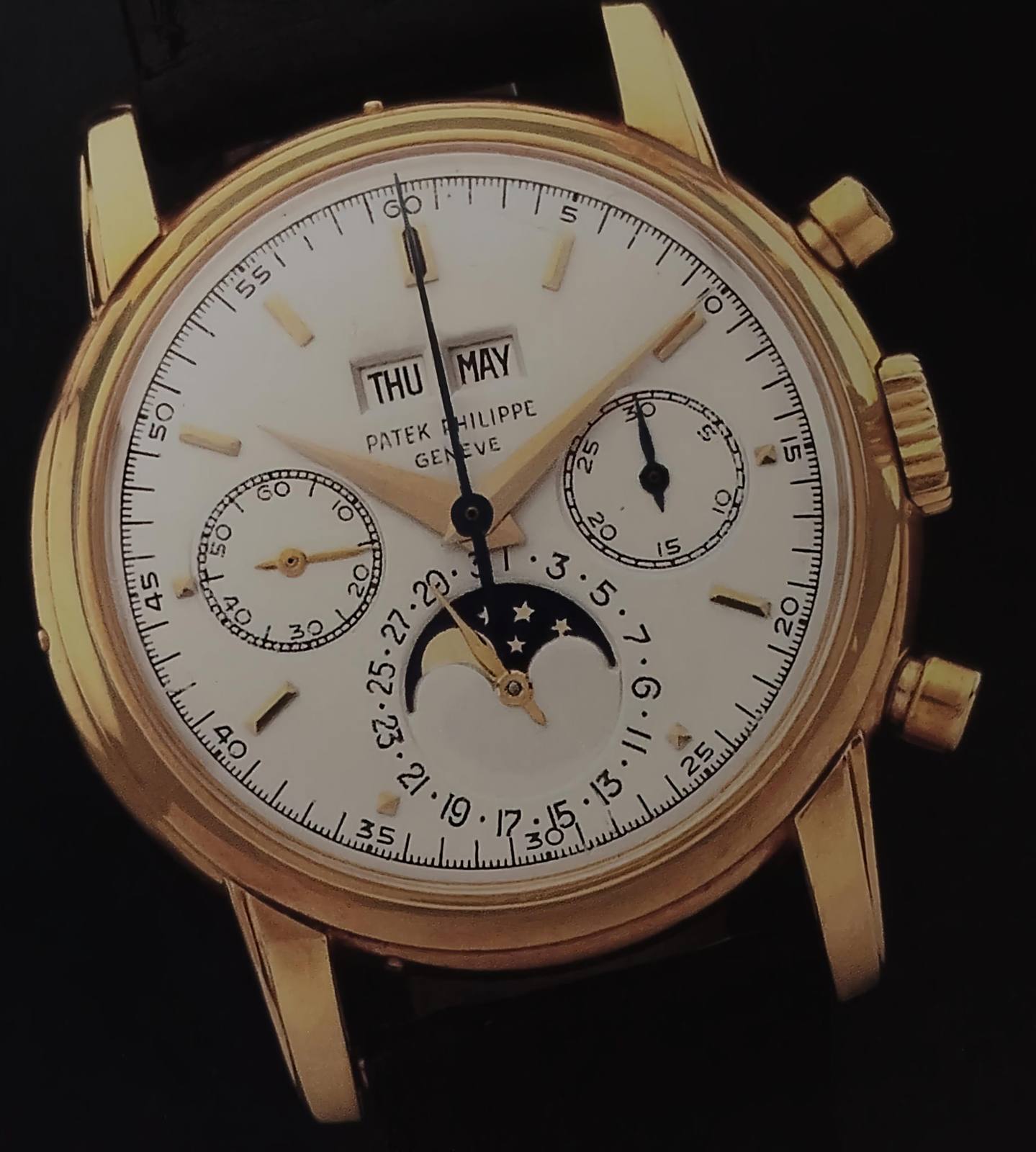
The Second Series keeps the tachymeter dial but switches to round chronograph pushers, a small change that transforms the profile of the case. The Third Series keeps the round pushers and drops the tachymeter, leaving a cleaner dial that reads more modern. The Fourth Series, known as the 2499/100, is distinguished by its sapphire crystal. Series correctness matters enormously at auction, because the earliest configuration in the best condition is where the records live.
What the money follows
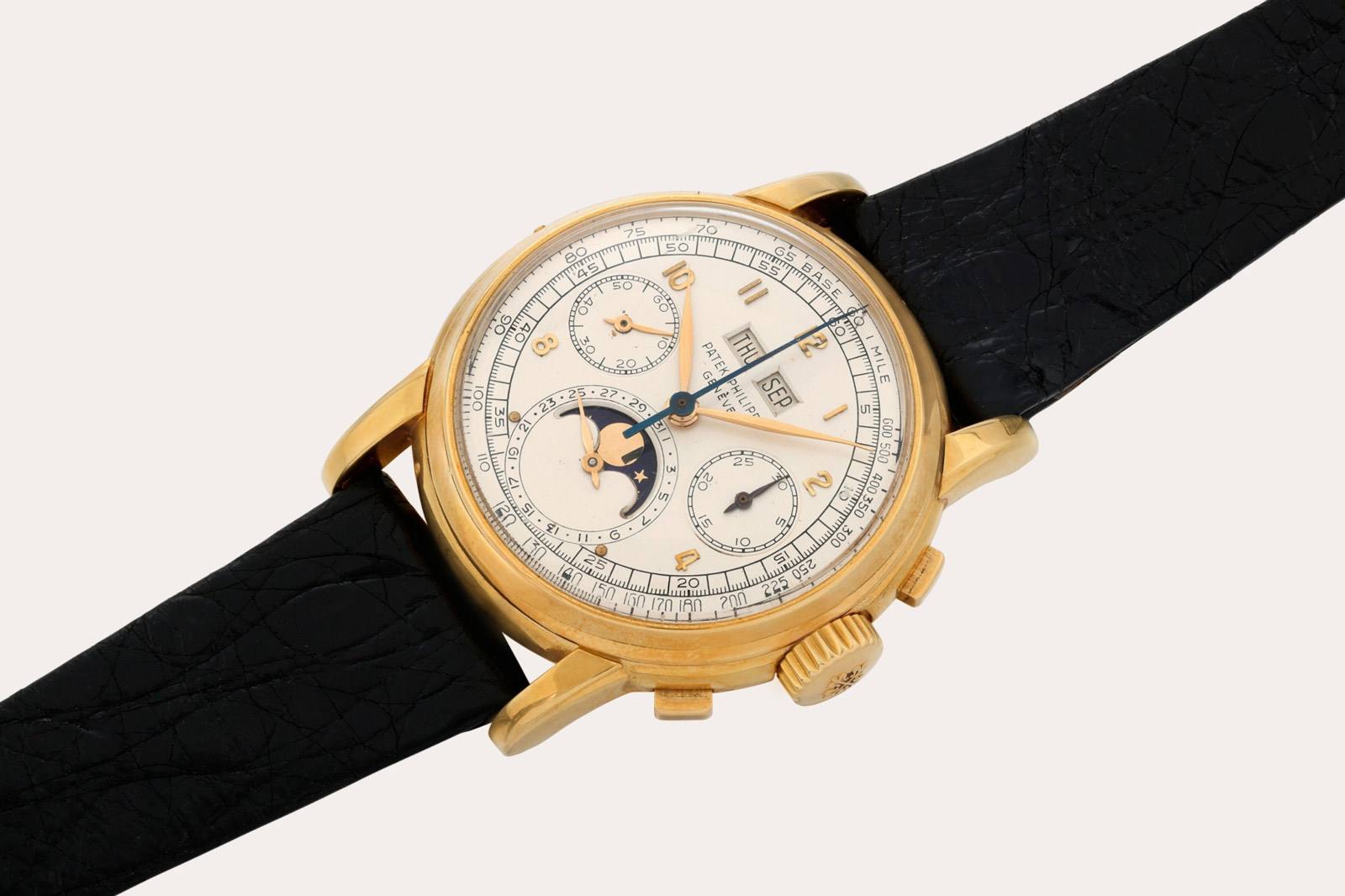
Metal is the first filter. Yellow gold dominates production, which is why the market pays its steepest premiums for the exceptions: pink and rose gold examples are vanishingly rare, and the US$10.2 million Hong Kong result was a pink-gold First Series. Dial condition is the second filter, and originality is the whole game. A refinished dial on a 2499 is not a restoration, it is a different watch. Retailer signatures add a third layer of desirability: examples signed by houses such as Tiffany & Co. are especially sought, and Bonhams has sold a Tiffany-signed Third Series that specialists still discuss.
Then there is provenance, which in this reference can double a result. The most famous 2499 of all never appears at auction anymore, and that is part of its power.
The Lennon 2499
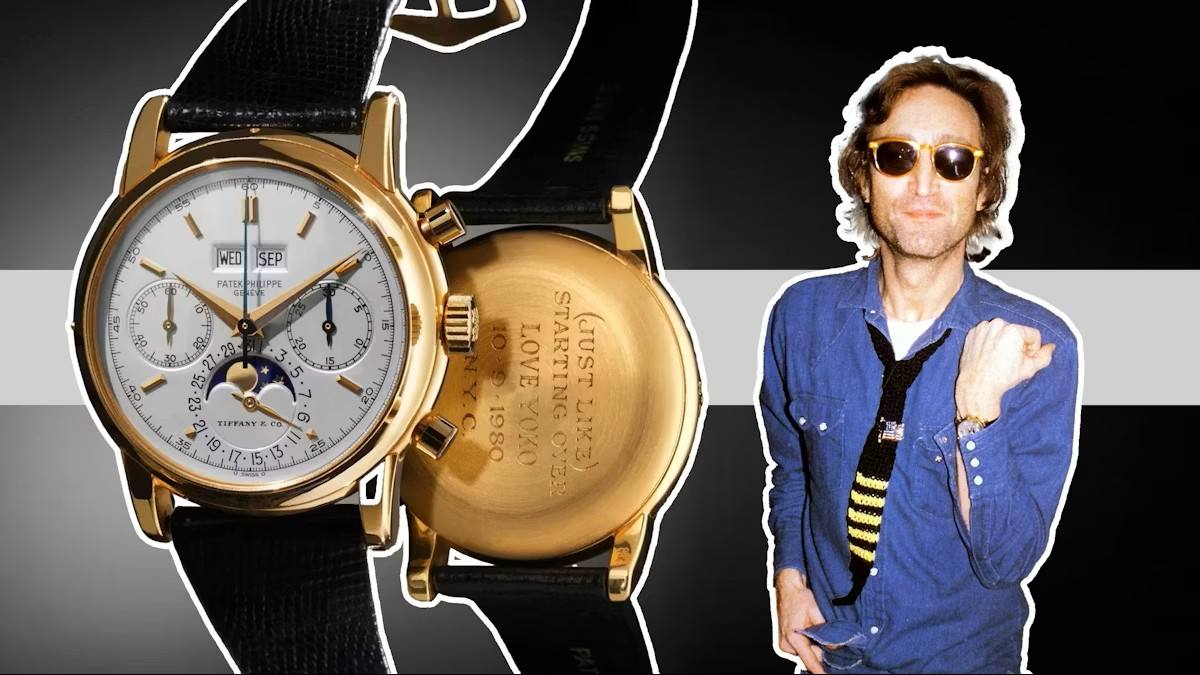
Yoko Ono gave John Lennon a yellow-gold ref. 2499 for his 40th birthday in 1980. The caseback is engraved "(JUST LIKE) STARTING OVER, LOVE YOKO. 10 • 9 • 1980. N. Y. C.", a reference to the single released that year. The watch later became the subject of a theft dispute, and in November 2024 a Swiss court confirmed Ono as its rightful owner. It is the single most storied 2499 in existence, and every collector who handles the reference knows its silhouette by heart.
Buying today
The 2499 rewards study and punishes haste. Check the series against the pushers and the dial: square pushers with a tachymeter means First Series, round pushers with a tachymeter means Second, round pushers without it means Third, and a sapphire crystal means the 2499/100. Demand the movement and case numbers, confirm the dial is untouched, and treat any replaced component as a discount, not a detail. With 349 watches spread across 35 years, there are no bargains left, only correctly priced ones. The Hong Kong result suggests the market has not finished deciding what the best of them are worth.