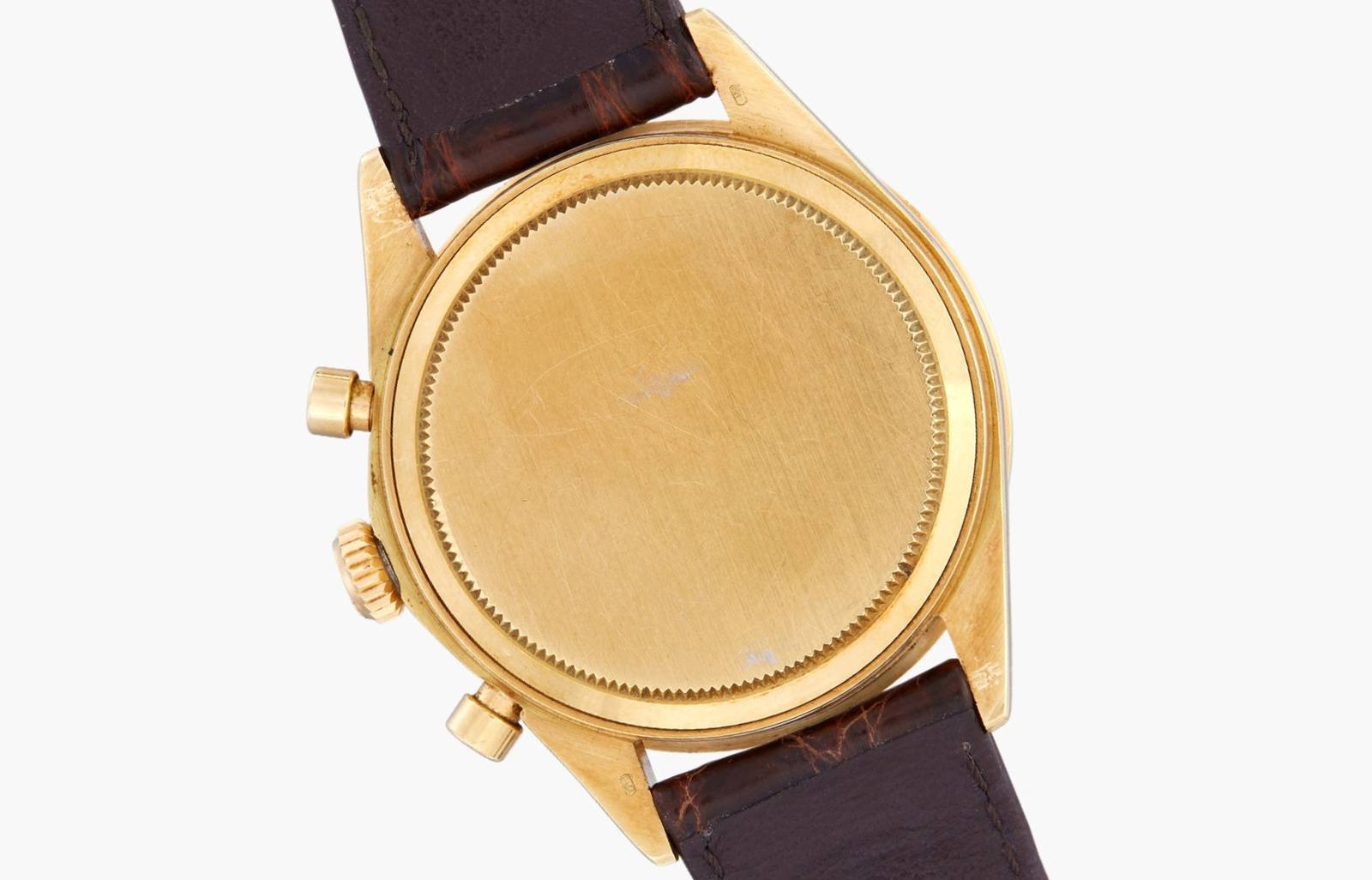
Some watches wait. This one waited more than 45 years in a family drawer, untouched, until two sisters inherited it and brought it to Sotheby's. On May 10, 2026, at the Important Watches sale in Geneva, the lot sold for CHF 1,143,000. The 1967 yellow-gold Rolex Daytona ref. 6239 with a black and champagne Paul Newman dial had set a new world record for the reference.
Sotheby's had estimated the watch at CHF 300,000 to CHF 600,000. It nearly doubled the high estimate, and Sotheby's own account of the sale called it a world record for one of the most coveted timepieces in the world. The story of the consignment, told by Sotheby's Mikael Wallhagen, is now part of the watch's provenance: two sisters, a forgotten drawer, and one of the rarest production Daytonas ever made.
The first Daytona reference
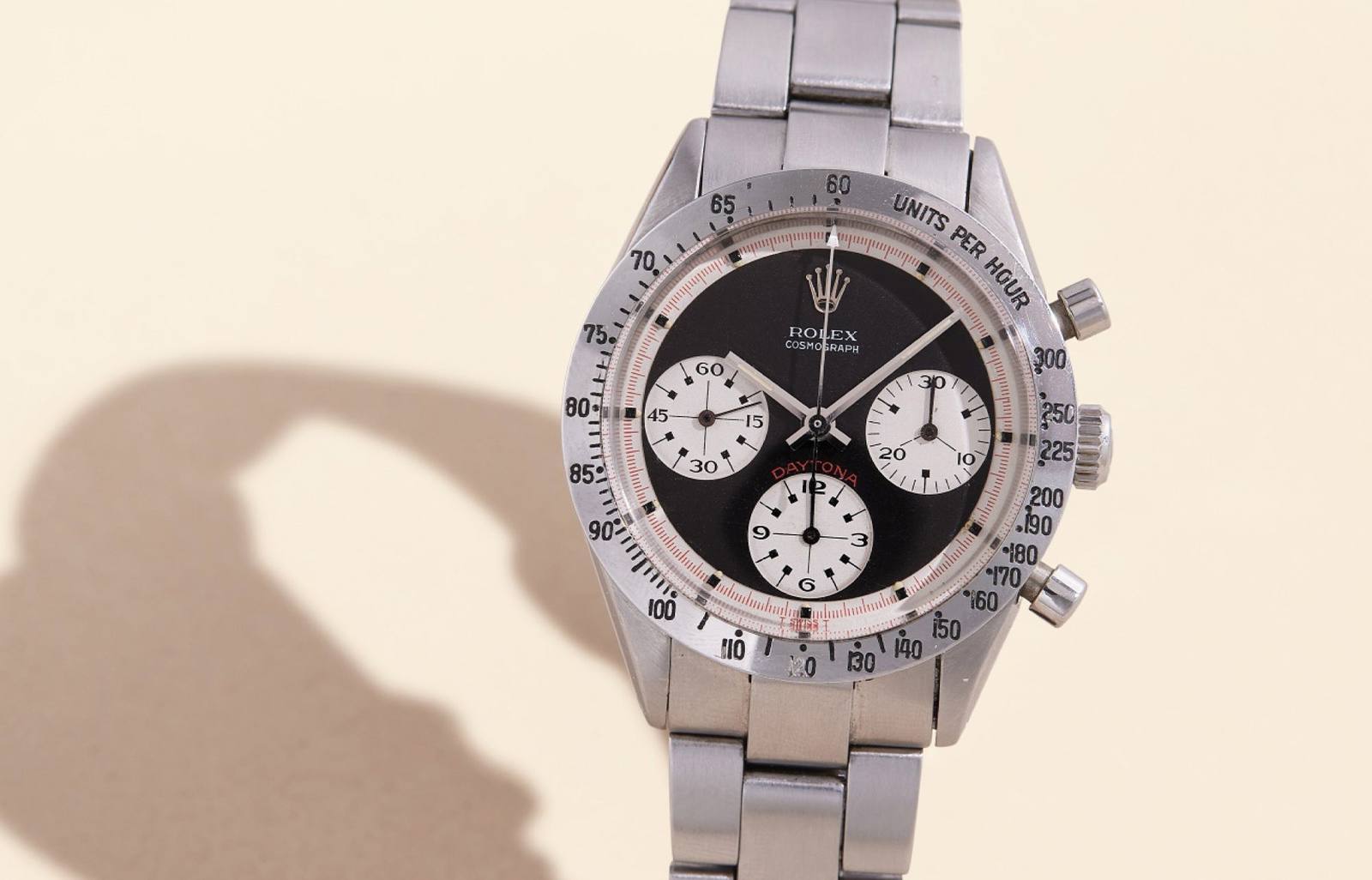
The ref. 6239 was the first Daytona reference Rolex ever produced, the watch that established the Cosmograph's design language: the smooth bezel, the pump pushers, the tri-compax layout. Most 6239s were steel. A small fraction were cased in yellow gold, and only a handful of those received the exotic multi-scale dial now known as the Paul Newman dial, with its art-deco numerals, contrasting subdials and blocky markers. Sotheby's research suggests that only around ten gold ref. 6239 watches with Paul Newman dials have ever resurfaced on the market.
The Paul Newman dial, up close
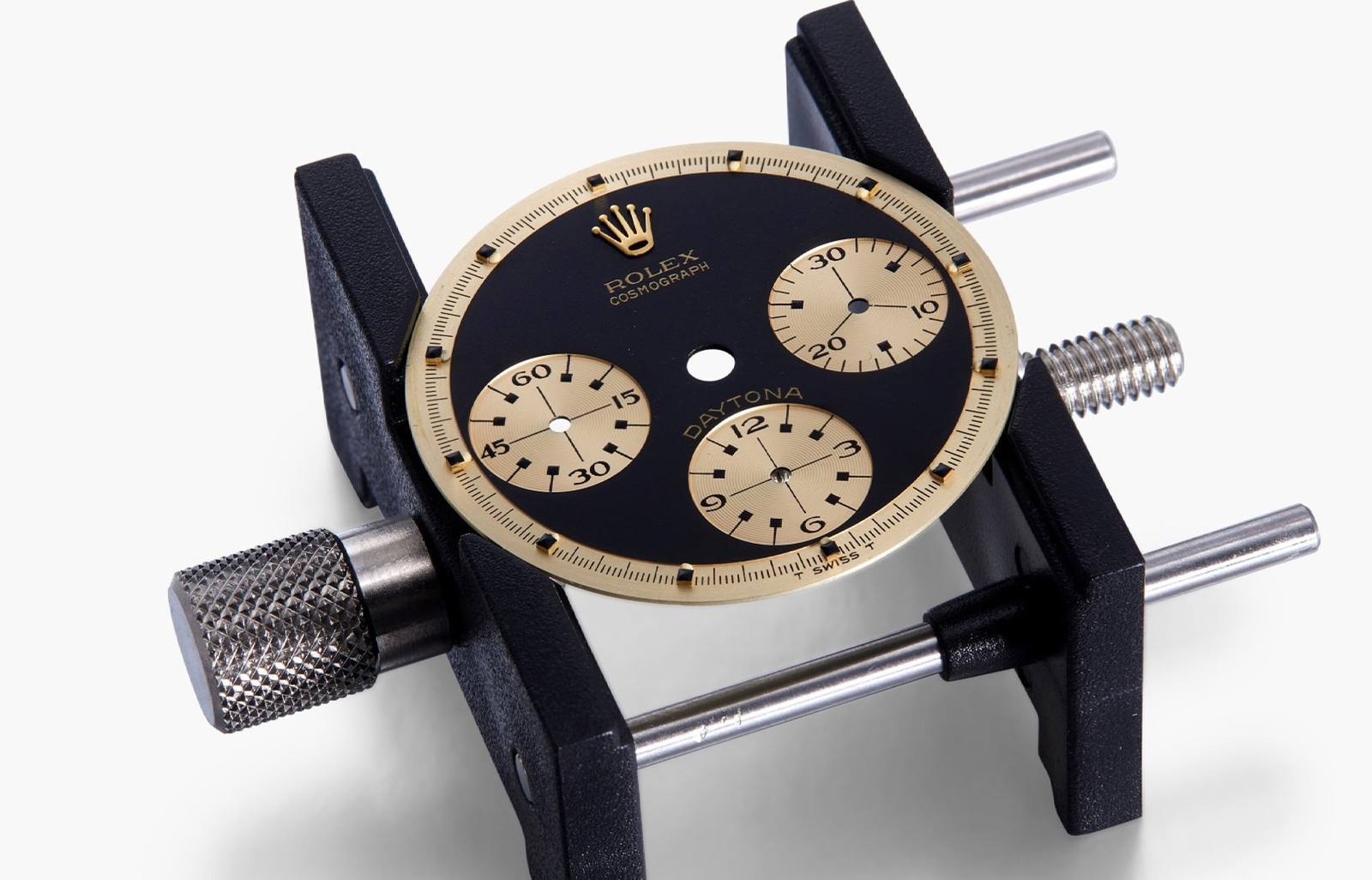
The dial is the other half of the equation. The "exotic" dials Rolex fitted to a small number of Daytonas in the 1960s, nicknamed for the actor who wore one, are defined by their art-deco numerals, the contrasting subdials and the blocky hour markers stepping inward from the minute track. On this watch, the black and champagne colorway plays against the yellow-gold case with a warmth the steel versions never achieve. The close-up photograph shows the printing at its crispest: these dials were slow sellers when new, which is precisely why so few survived in any condition, let alone this one.
Why gold changes everything
Paul Newman Daytonas appear in steel at every major sale. Gold changes the register entirely. The yellow-gold case warms the black and champagne dial in a way steel cannot, and the survival rate of gold sports Rolexes from the 1960s is brutally low: these were expensive watches bought to be worn, not stored. A drawer-kept example with 45 years of drawer time and a single-family history is the configuration the market dreams about and almost never finds.
The sale around it
The same Sotheby's Geneva sale underlined the point. A steel Paul Newman ref. 6239 shows the reference in its familiar form, and the contrast makes the gold watch's result legible: same dial architecture, same era, transformed by the case metal and the condition. Gold Daytonas set the pace in Geneva that weekend, and this 6239 set the pace for gold Daytonas. When the next one surfaces, and Sotheby's suggests there are only around ten in existence, the CHF 1,143,000 record is the number every consignor will quote.
What the record means
Reference records matter because they reprice everything beneath them. A gold Paul Newman 6239 at CHF 1,143,000 does not just set a ceiling for the ten known examples, it lifts the perceived value of every early gold Daytona and every fresh-to-market consignment with a family story. Sotheby's framed the sale as proof that the next world record could be sitting in a drawer, and the pitch worked because the watch backed it up: original-owner family, 45 years untouched, one of around ten. When the next gold 6239 Paul Newman crosses a block, this is the number it will be measured against.