At the Concours of Elegance in early September, A. Lange & Söhne introduced new editions of two very different watches: the 1815 UP/DOWN, the manufacture's elegant time-and-power-reserve dress watch, and the TRIPLE SPLIT, its mechanical benchmark for measuring comparative times. It is a venue the Saxon manufacture has used before for significant unveilings, including the Cabaret Tourbillon Honeygold at the Concorso d'Eleganza Villa d'Este in May. Placed side by side, the two September releases make the house argument in full: mechanical complexity does not determine aesthetic seriousness.
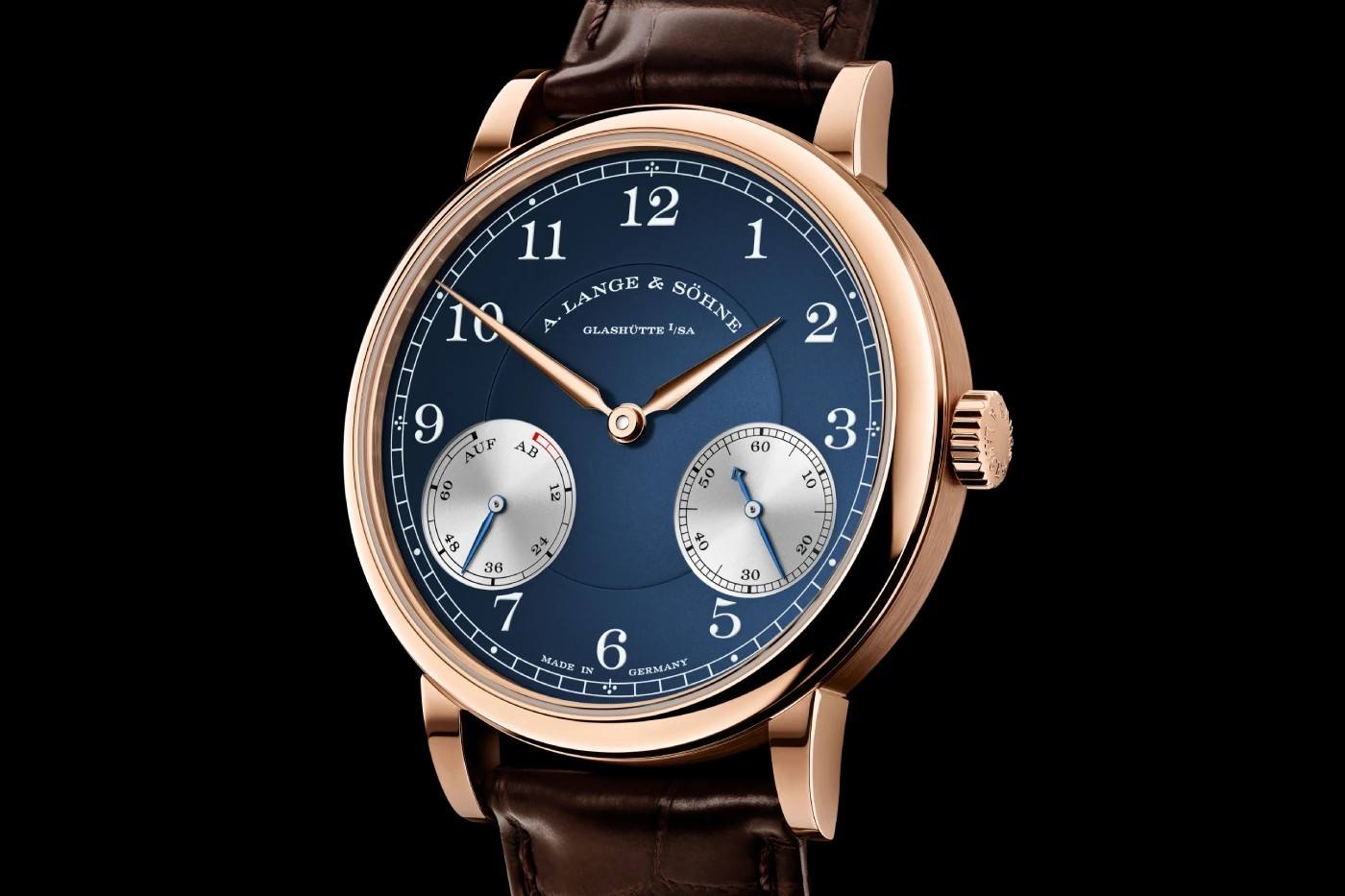
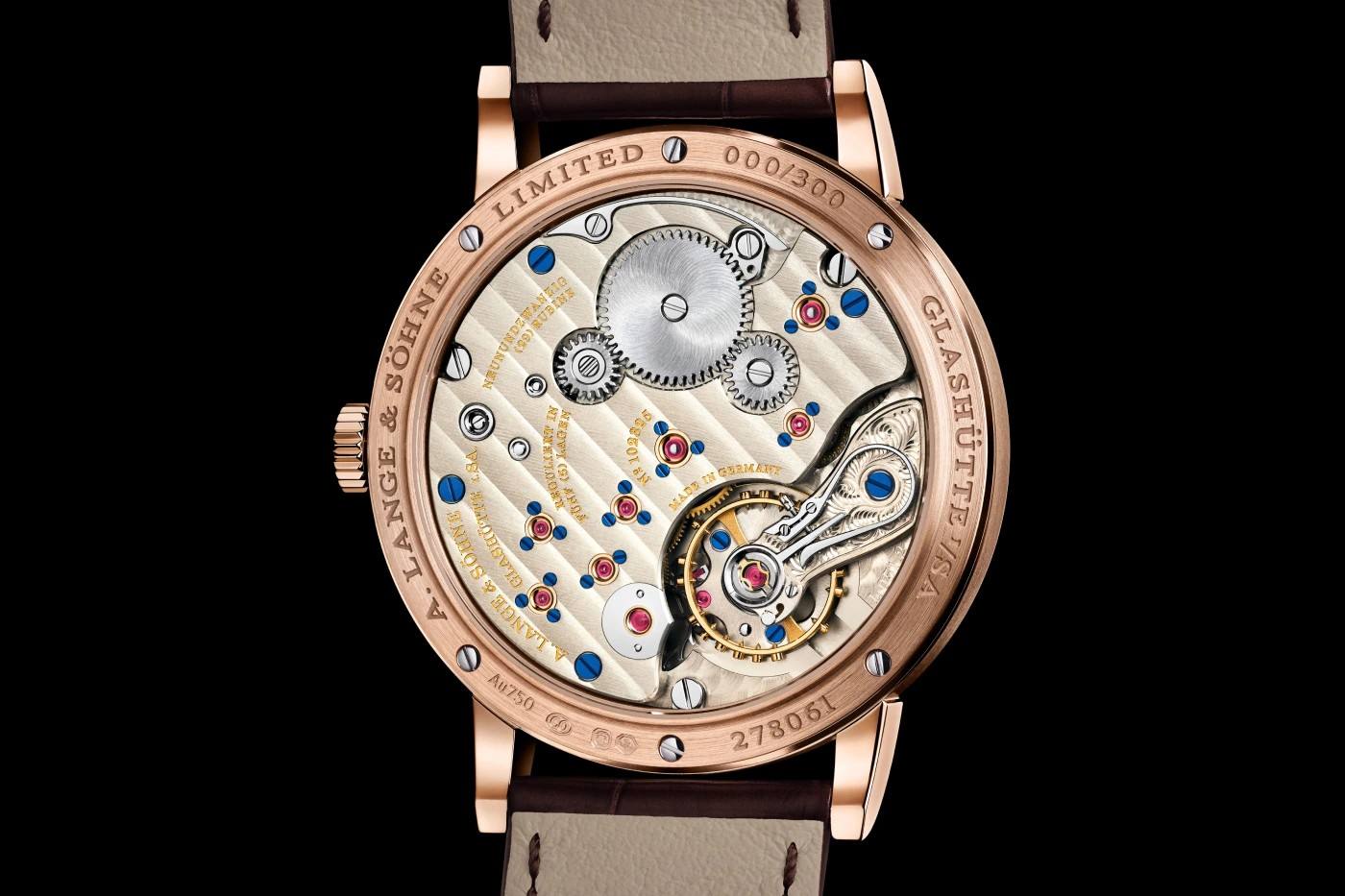
The new 1815 UP/DOWN arrives in 750 white gold and 750 pink gold, each limited to 300 pieces. The compact case measures 37.5 mm in diameter and 8.7 mm in height, and the deep blue dial is set against argenté-coloured auxiliary displays, a railway-track minute scale and blued hands. The power-reserve indicator sits opposite the subsidiary seconds, with AUF and AB markings driven by the manually wound L051.2 manufacture calibre. The indication is integrated into the movement through a space-saving planetary gear rather than an added module, a construction detail that keeps the calibre slim and the case under nine millimetres.
The model's design language traces to the pocket watches of Ferdinand Adolph Lange, and this edition is a study in restraint: nothing on the dial is new in function, yet the blue-and-argenté palette reads as thoroughly contemporary against the classic Glashütte layout. The 1815 family has always been the manufacture's quietest statement, and the choice to extend it in two golds with a shared blue dial suggests Lange sees colour, rather than complication, as the current frontier for the line.
One hundred platinum split-seconds
The TRIPLE SPLIT moves in the opposite direction, both mechanically and chromatically. The new edition pairs a 43.2 mm platinum case with a rhodié-coloured dial and dark grey subdials, and production is capped at 100 watches. It is a triple split-seconds chronograph capable of measuring comparative and intermediate times for up to 12 hours, driven by a 567-component movement, as detailed in launch coverage. Where a standard rattrapante times two events within a single minute register, the TRIPLE SPLIT extends the principle across hours, a mechanism aimed at timing extended, overlapping events.
The cool, monochrome palette is a deliberate counterpoint to the warm blue of the 1815 editions, but the presentation follows the same philosophy: the complication is shown plainly, with no visual theatre beyond what the mechanism requires. The rhodié dial and grey subdials keep a 43.2 mm platinum chronograph visually disciplined, which is itself a technical achievement of design.
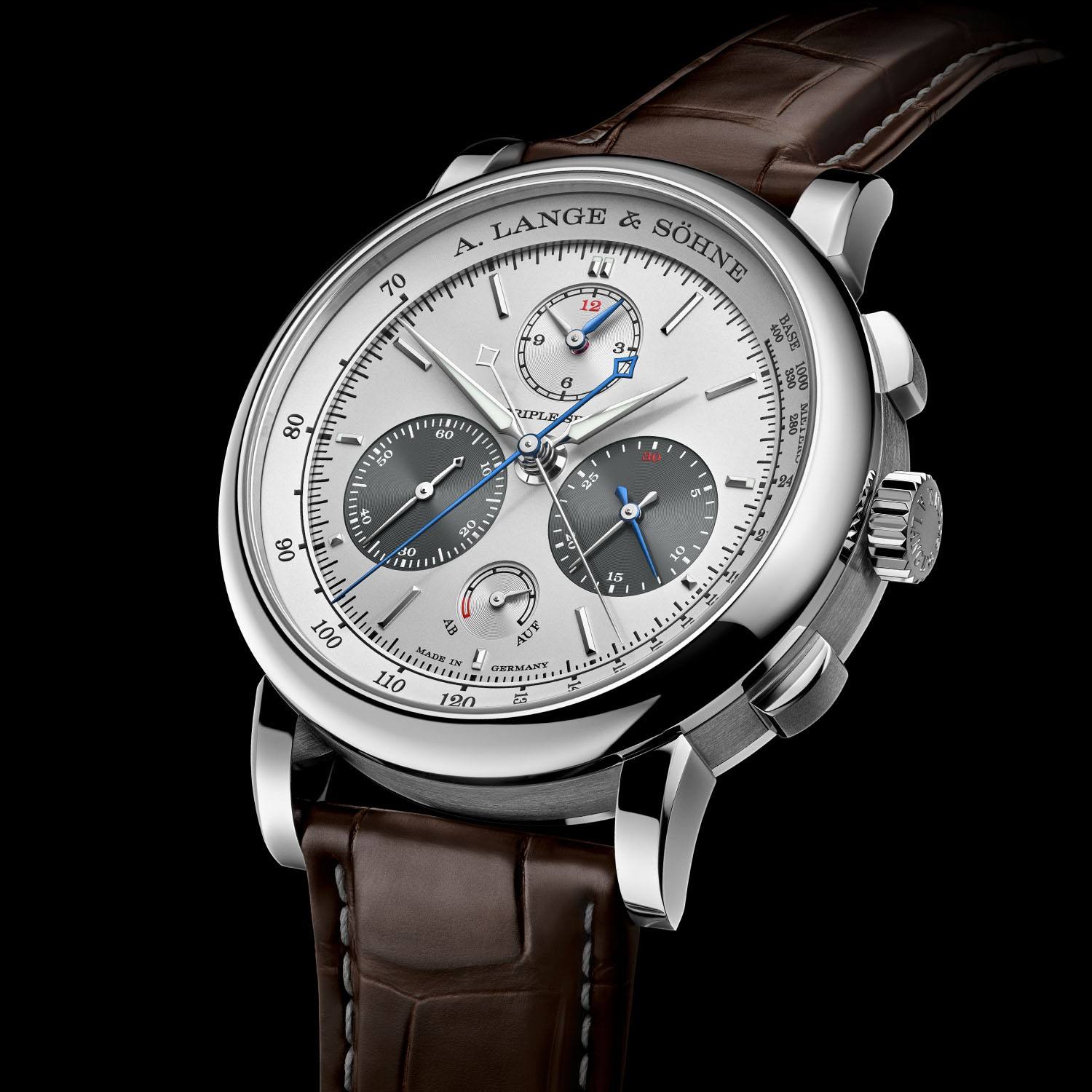
Taken together, the two releases illustrate how the manufacture extends its most celebrated families. The 1815 UP/DOWN changes the light on a familiar dial; the TRIPLE SPLIT changes the metal around an uncommon mechanism. Evaluated from manufacturer specifications and published reporting, both are exercises in the same discipline: change only what the watch needs, and let the rest speak for itself.