De Bethune has always preferred its own answers to questions nobody else was asking. The DB25 Digitale, unveiled at Geneva Watch Days in early September 2026, revisits the Maison's emblematic digital displays, the line that began with the DBD, and rebuilds them as something contemplative rather than mechanical: a hand-free dial that reads time through architecture instead of hands.
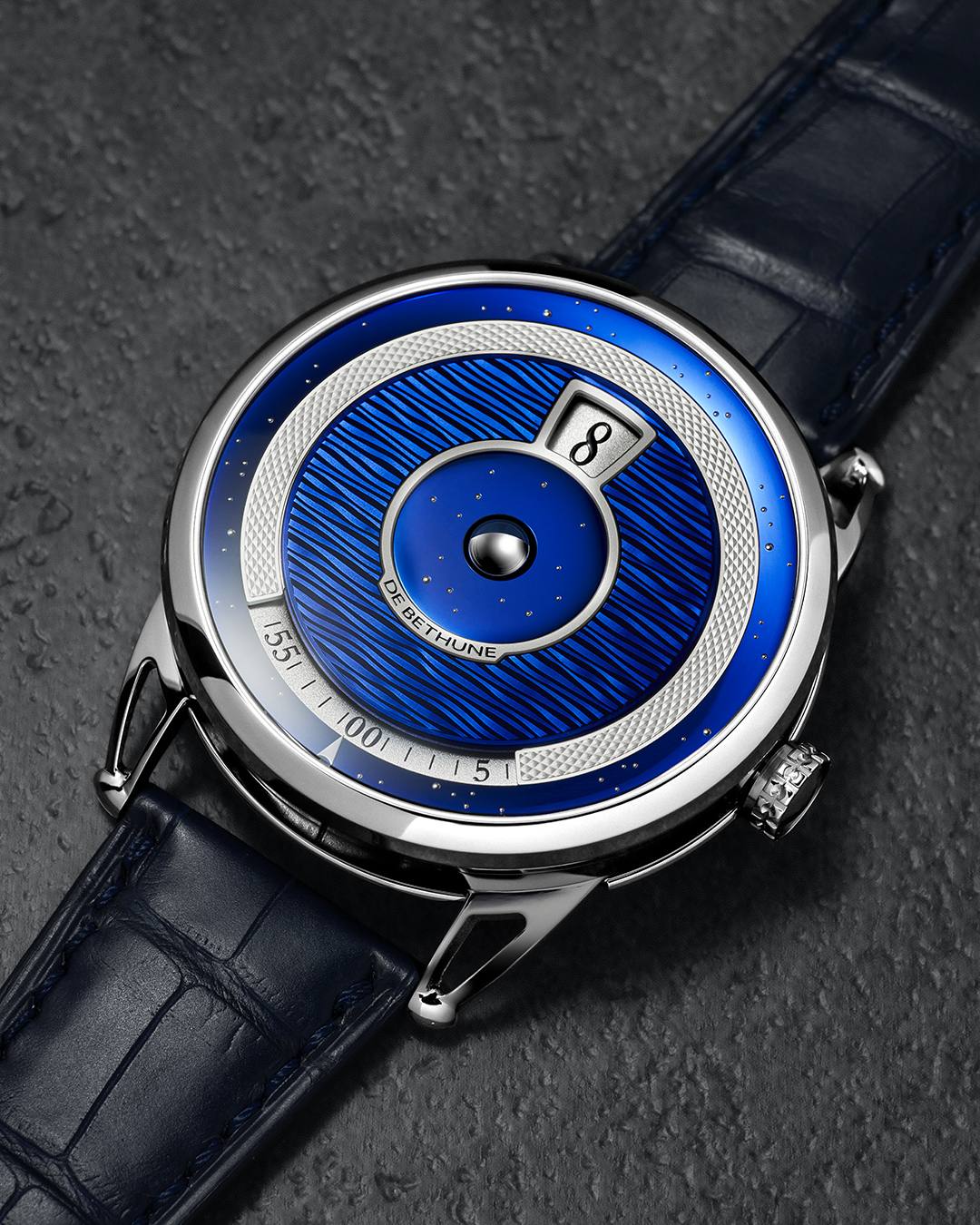
The display is concentric and triple-layered. Hours jump in a window at twelve o'clock, while minutes are read from an analogue rotating disc at six, the whole driven by an internal micro ball-bearing mechanism. It is worth pausing on what 'hand-free' means mechanically. A conventional watch translates the gear train's rotation into the sweep of hands; here the gear train drives discs and drums directly, which is a harder engineering problem, because the tolerances of a jumping display are unforgiving and there is nowhere for imprecision to hide.
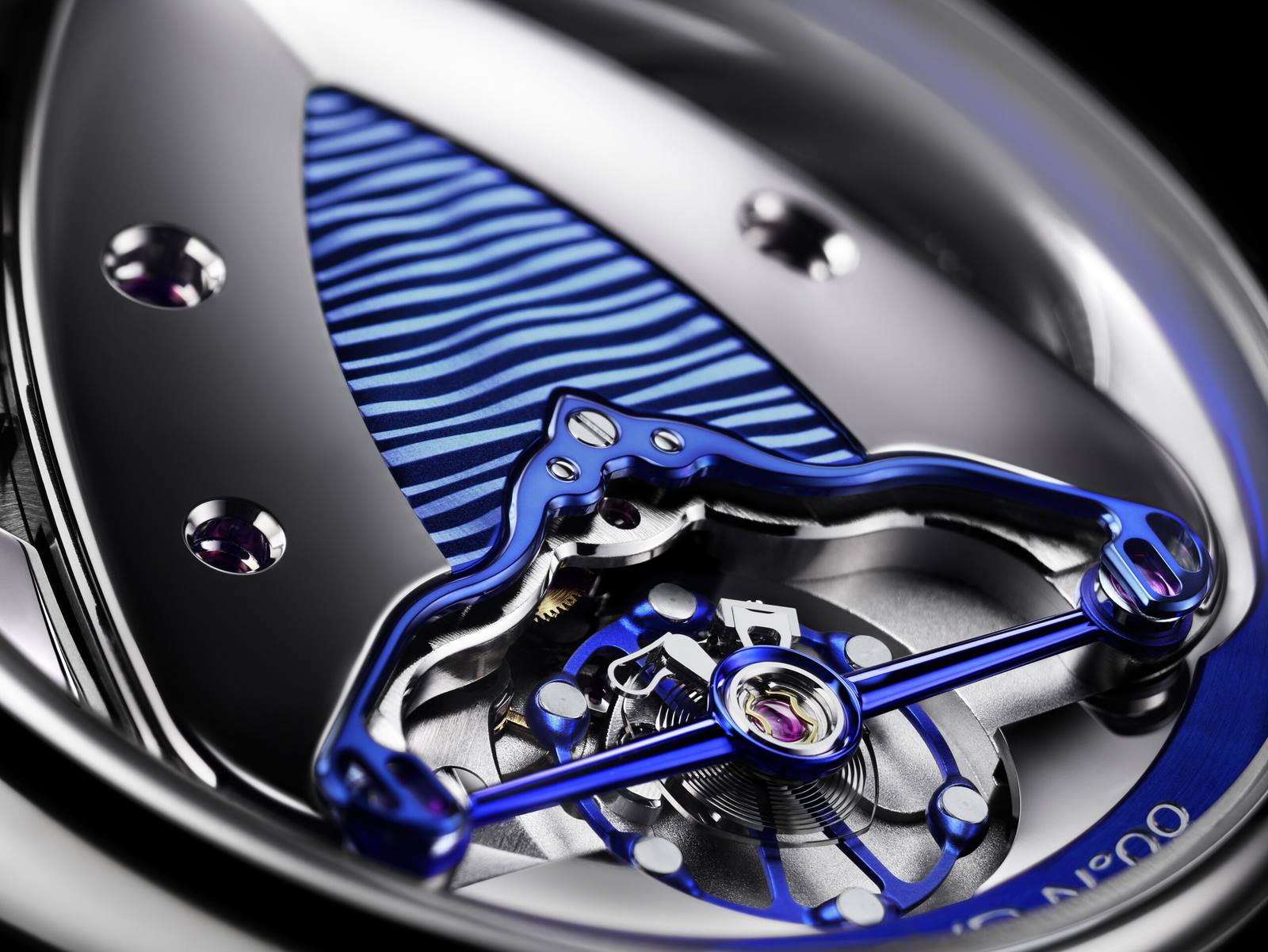
The dial itself is constructed from 82 distinct elements, a figure that tells you this is closer to marquetry than to dial-making. An outer silvered track carries hand-guilloche barleycorn motifs, the classical engine-turned pattern, while the inner disc is blued titanium worked with De Bethune's proprietary random guilloche, producing a starlit effect. The contrast is deliberate: traditional craft on the outside, the Maison's nocturnal aesthetic on the inside, a moonlit river beneath a starry sky.
At the centre sits the signature spherical moonphase, two polished hemispheres of palladium and flame-blued steel, inclined at sixty degrees. It is engineered to deviate by only one lunar day every 1,112 years, a figure that says as much about De Bethune's relationship with time as any specification could. The moonphase here is not a complication so much as a philosophy made visible: time as an astronomical fact, not an appointment.
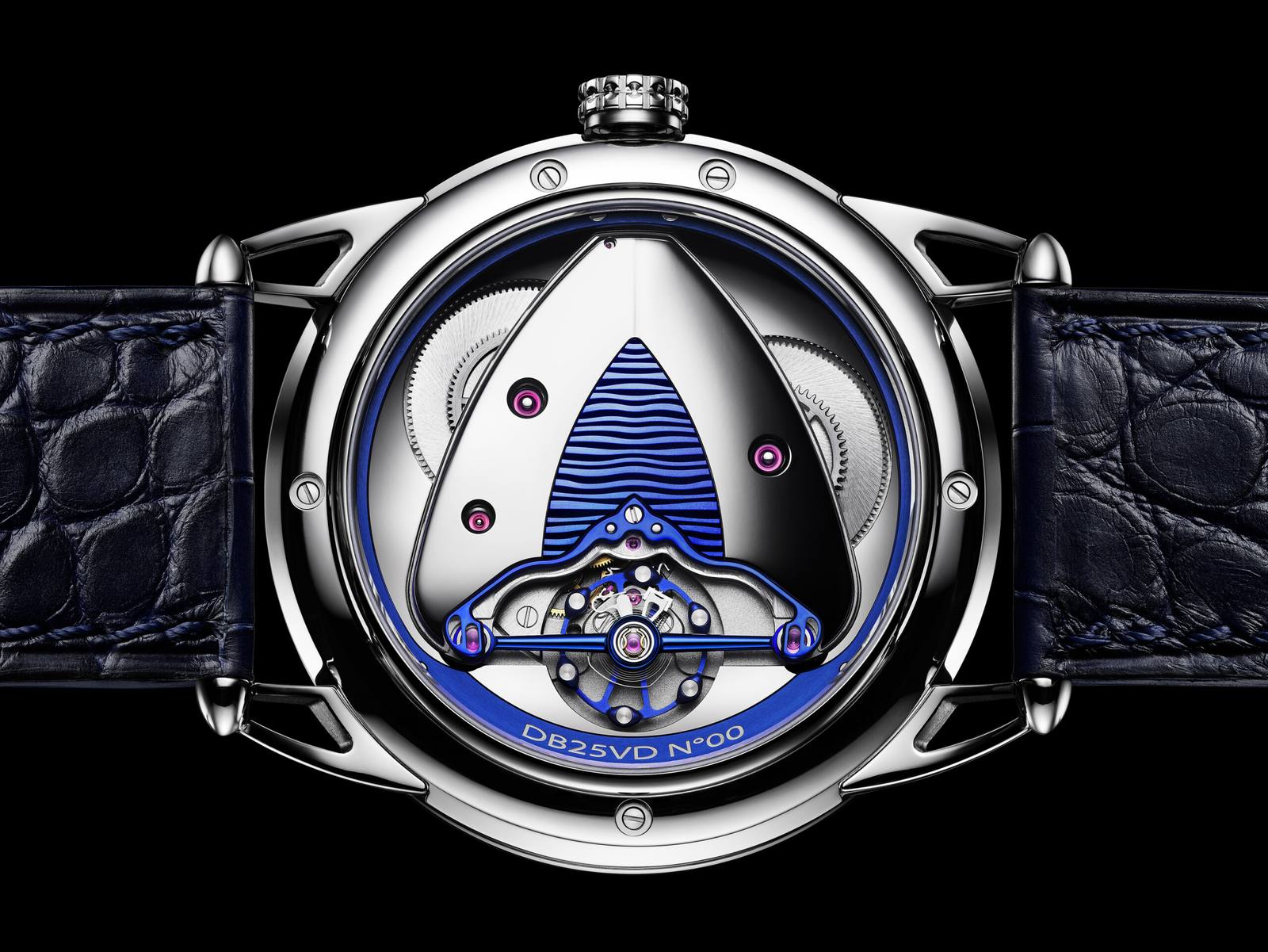
The case is mirror-polished Grade 5 titanium, 42mm across and 11.9mm thick, with slender openworked 'bullet' lugs. Through the screw-down sapphire back runs the third-generation in-house calibre DB2144V3, a hand-wound movement of 416 components and 32 jewels with a five-day power reserve.
De Bethune's approach to the digital display has always been philosophical rather than nostalgic. Where the 1970s LED watches treated digits as technology, De Bethune treats them as architecture, and the Digitale's hand-free layout pushes that idea to its limit. There is also a quiet technical confidence in choosing jumping hours, a complication that punishes imprecision, for a watch whose whole identity is calm. The mechanism cannot be approximate; the display would show it instantly.
The DB25 Digitale lands in a year when chiming watches and rethought chronographs dominated the conversation, and it quietly makes the opposite bet: that the most radical thing a watch can do in 2026 is slow down. No hands, no noise, just hours that jump and minutes that turn beneath a moon that will outlast everyone reading this. It is the kind of release that explains why independent watchmaking keeps commanding the attention it does: it solves no problem, and answers a question only it thought to ask.