Of all the watches Tudor could have revived, the Northflag was the interesting choice. Introduced in 2015 as the first Tudor to carry a manufacture movement, its sharp, integrated design owed more to the 1973 Ranger II and the equipment of the 1950s British North Greenland Expedition than to anything else in the catalogue. It was admired, it was odd, and in 2021 it was discontinued, leaving behind the kind of retrospective appreciation that often follows watches which never quite fit their manufacturer's broader line. On 1 September 2026, it returned.
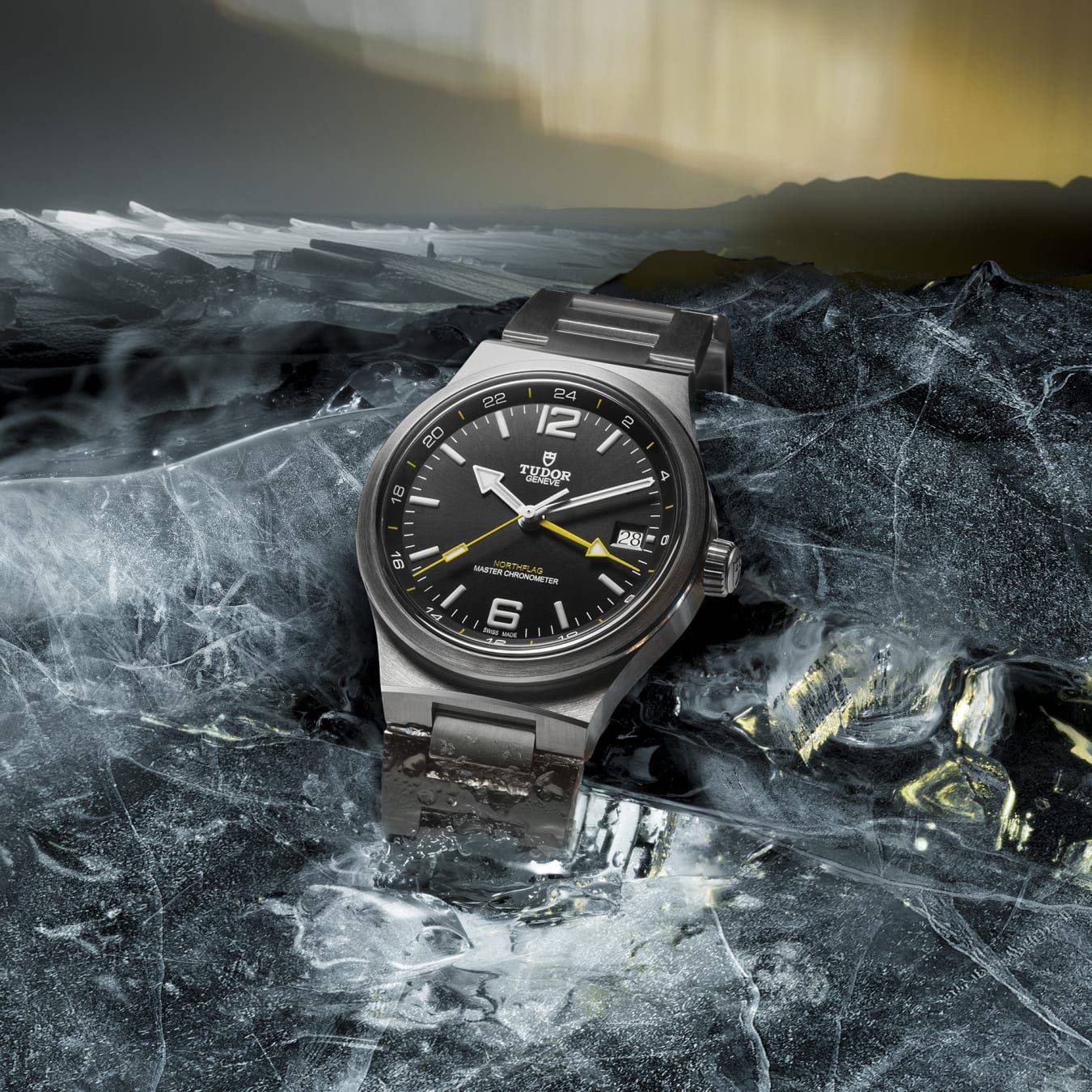
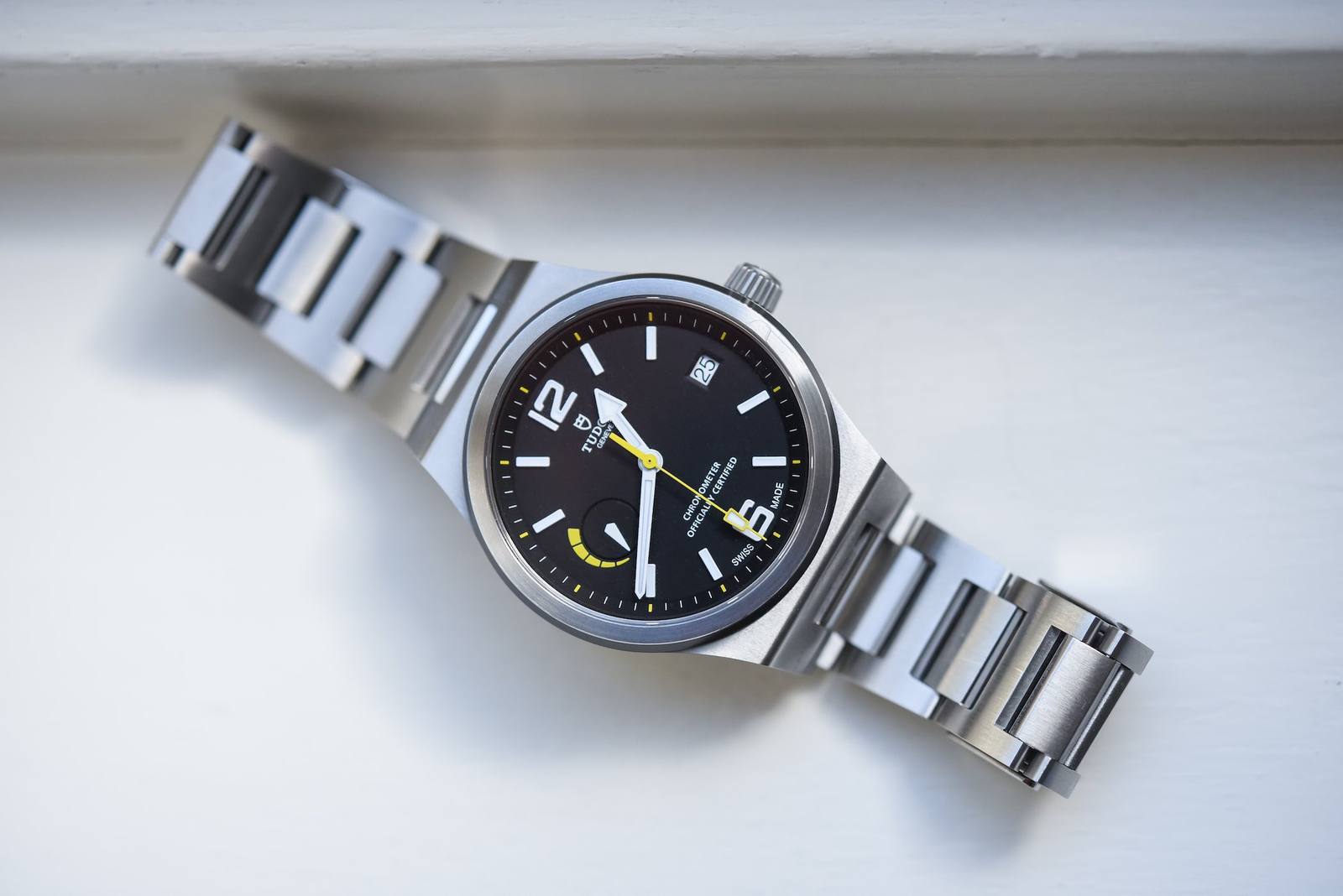
The second-generation Northflag, reference M9140G1A0U, keeps the 40mm 316L stainless steel architecture and the polar design language, but trades the original's 3 o'clock power-reserve indicator for a flyer GMT complication. A central 24-hour hand in vivid yellow works against a sloped 24-hour rehaut around the dial's perimeter, and the local hour hand jumps independently for quick time-zone changes, the genuinely useful kind of GMT for travellers who cross zones rather than merely track them. The black sunburst dial keeps monobloc ceramic luminous hour markers and arrow hands, with the date at three.
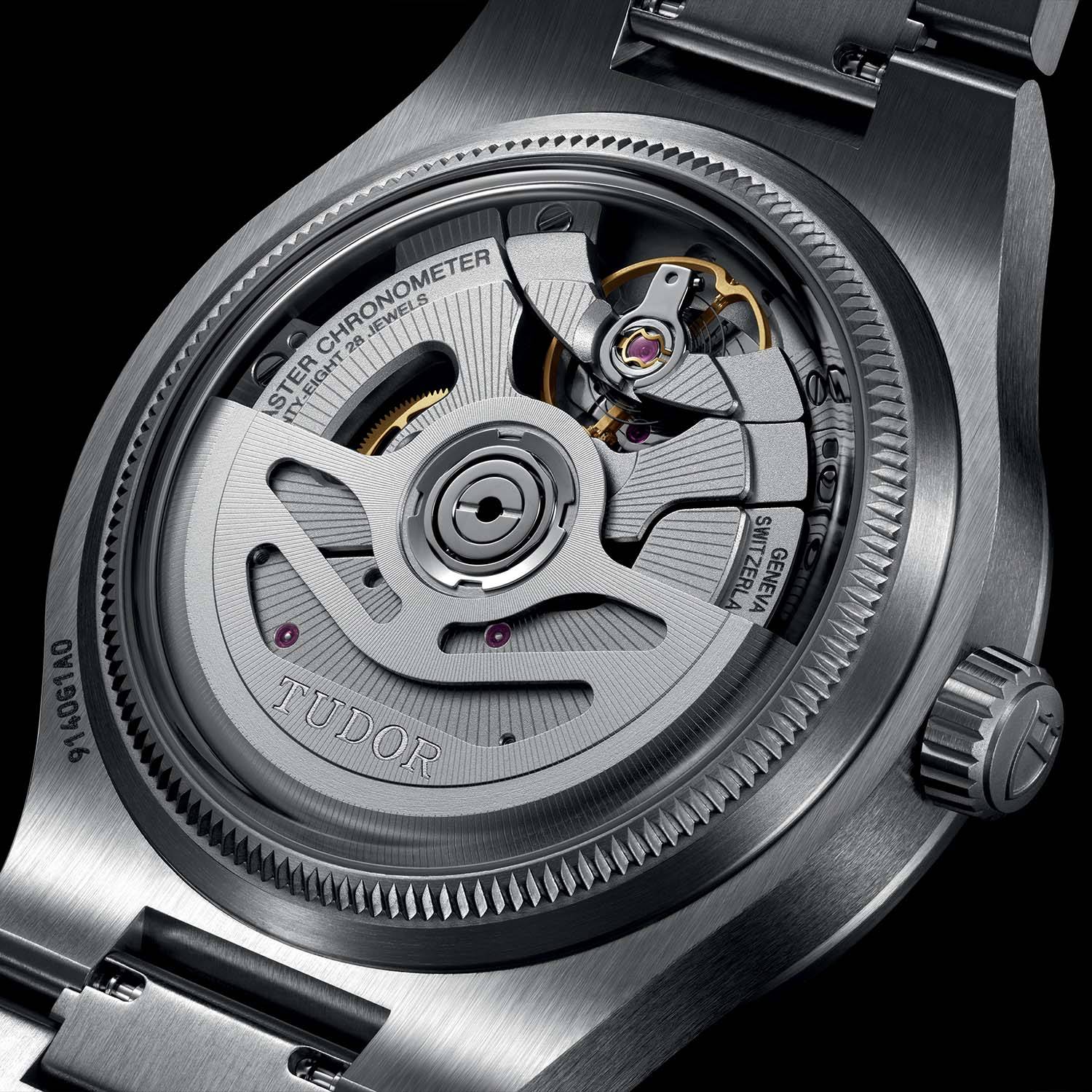
The case has been slimmed to 12.7mm from 13.4mm, and lug-to-lug drops from 50mm to 48.8mm, small numbers that matter on an integrated design where the bracelet flows directly from the case. Through the sapphire exhibition caseback, a detail carried over from the original, sits the manufacture calibre MT5652-U, the same GMT movement found in Tudor's Pelagos FXD GMT. It carries both COSC and METAS Master Chronometer certification. The METAS standard is not a marketing exercise: it requires the watch to run within 0 to +5 seconds a day, tighter than Tudor's own internal standard, and to hold that accuracy after exposure to a 15,000 gauss magnetic field. Power reserve is 65 hours, the weekend-proof figure Tudor favours, and water resistance is rated to 100 metres.
The integrated two-link bracelet now closes with Tudor's T-fit rapid-adjustment clasp, offering 8mm of tool-free adjustment across five positions on ceramic ball bearings. Reported pricing is US$5,525, or GBP 4,310 in the UK.
The Northflag's return also reflects how the integrated sports watch has evolved from a 1970s curiosity into the industry's default design language. When the original launched in 2015, the form was still dominated by its inventors; today, from the Royal Oak's descendants to the Octo Finissimo to a dozen independent interpretations, the integrated bracelet is simply how a modern sports watch looks. Tudor's version remains distinctive for its angularity, the sharp facets and the cone-shaped crown giving it an instrument-like character that softer integrated designs lack.
The revival is well timed. The original Northflag arrived in 2015 when Tudor's identity was still settling; its angular modernism sat uneasily beside the Black Bay's vintage warmth. A decade on, the brand is confident enough to let both registers coexist, and the integrated sports watch, from Genta's 1970s classics to today's Octo Finissimo, has become one of the industry's defining forms. What the original Northflag suggested, that Tudor could do modern tool watches as convincingly as vintage-inflected ones, the new version finally delivers on. The GMT is the right complication for it too: a polar exploration watch that can actually track two time zones is a better idea than a polar exploration watch with a power reserve gauge.