Rolex does not celebrate anniversaries often, which is precisely why the Oyster Perpetual '100 Years', unveiled at Watches and Wonders in April 2026, carried more weight than its understated slate dial might suggest. It marks a century since the launch of the Oyster case in 1926, the hermetically sealed architecture with screw-down crown and caseback that underpins everything from the Submariner to the Day-Date, and that Rolex itself describes as one of the great leaps in watchmaking history. The manufacture has registered more than 700 patents in its history; the Oyster remains the foundation they all rest on.
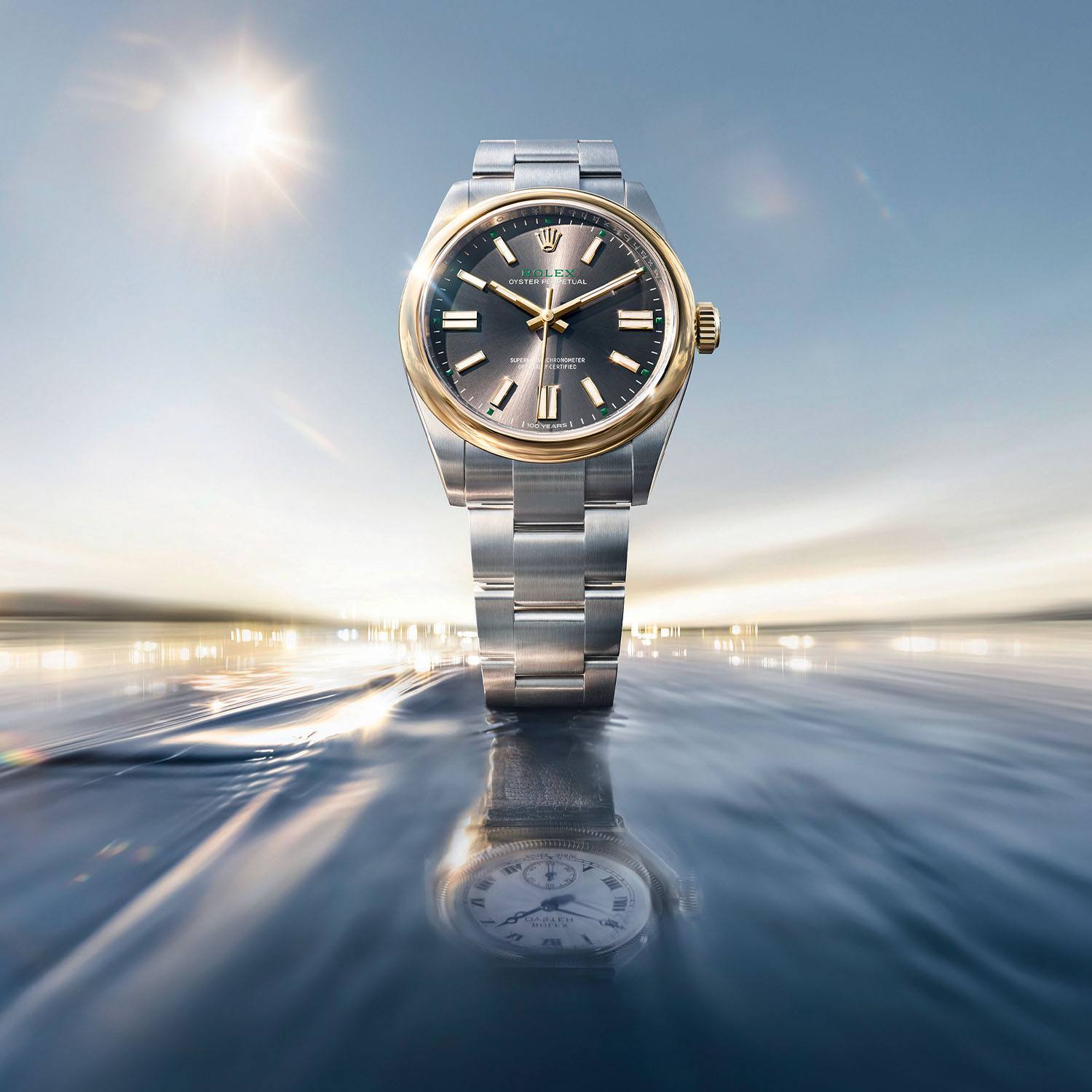
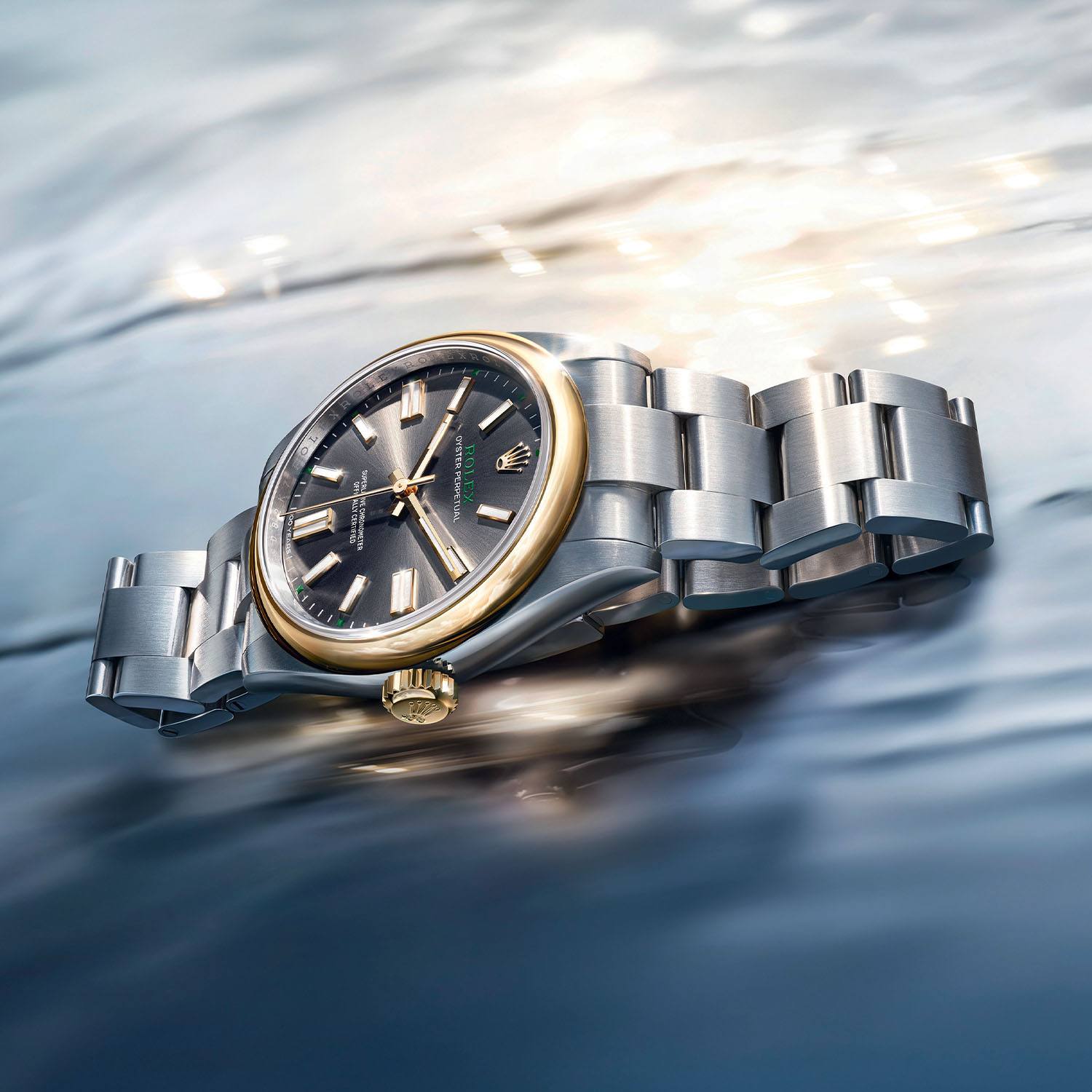
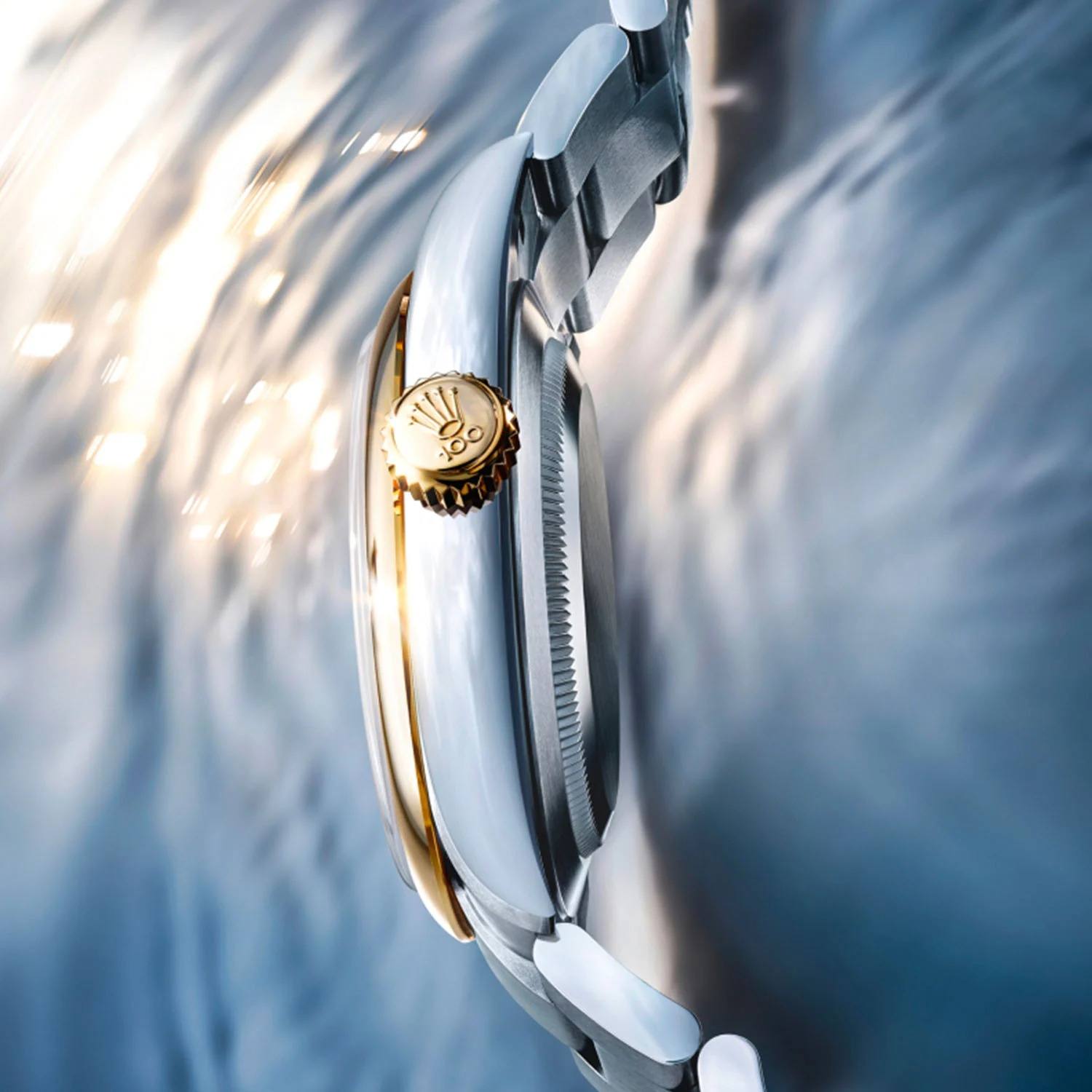
The headline piece is the Oyster Perpetual 41, reference 134303, presented in what Rolex calls yellow Rolesor. Look closely, though, and the two-tone execution breaks the house's own convention. The 18k yellow gold is reserved for the bezel and the Twinlock winding crown, while the bracelet, including its centre links, remains in Oystersteel. On a traditional Rolesor model those links would be gold; here their absence is a deliberate callback to early Oyster references of the 1930s. The slate grey sunray dial carries a green Rolex signature and small green squares at each five-minute interval. At six o'clock, where 'Swiss Made' would normally sit, the dial reads '100 Years', and the crown itself bears the number 100 in relief.
Inside is the calibre 3230, the manufacture's no-date automatic movement, and the watch is waterproof to 100 metres. Reported pricing puts the 41mm model at US$9,650, with 36mm and 31mm versions at US$8,450 and US$7,700 respectively, each carrying the same centenary signature. In Europe, the 41mm is reported at EUR 9,400.
Beyond the anniversary piece
The centenary edition was only part of a broader Oyster Perpetual story. The 36mm model gained a multi-colour 'Jubilee' dial that spells out the Rolex name in repeated lettering, a motif the manufacture first used in the 1970s, now given a colourful reworking. The colours are not applied all at once but built up in stages, which is part of why the effect reads as playful rather than printed.
More surprising were the Oyster Perpetual 28 and 34 in solid yellow and Everose gold, fitted with blue or green stone-lacquer dials and hour markers cut from natural stone, reported as a first for the brand. For a collection long positioned as the entry point to the crown, solid gold with stone dials is a meaningful elevation, and it continues a pattern of recent years in which the Oyster Perpetual has become Rolex's canvas for dial experimentation, from the lacquer colours of 2020 to the Celebration motif.
Elsewhere in the 2026 line-up, the Day-Date appeared in a brand-new Jubilee Gold alloy, described as sitting between yellow, rose and grey gold, and the Datejust 41 gained a white Rolesor version with a green lacquered ombre dial, the first ombre dial coloured entirely by lacquering since the pattern's reintroduction. The Daytona collection was enriched by a model with an all-white enamel dial, a retro-style Cerachrom bezel and a Rolesium case. And the Yacht-Master II was comprehensively reworked around the newly developed calibre 4162: the programmable countdown timer remains, but it is now operated via pushers, making the Ring Command bezel of older models a thing of the past.
But it was the '100 Years' Oyster Perpetual that set the tone for Rolex's 2026. The brand's habit is to make small changes that take a while to register and end up mattering a great deal. A two-tone Oyster Perpetual whose bracelet refuses to be two-tone, a dial signature that replaces Swiss Made for one year only, a crown stamped with a number: Rolex at its most confident, changing almost nothing, and getting almost everything right.