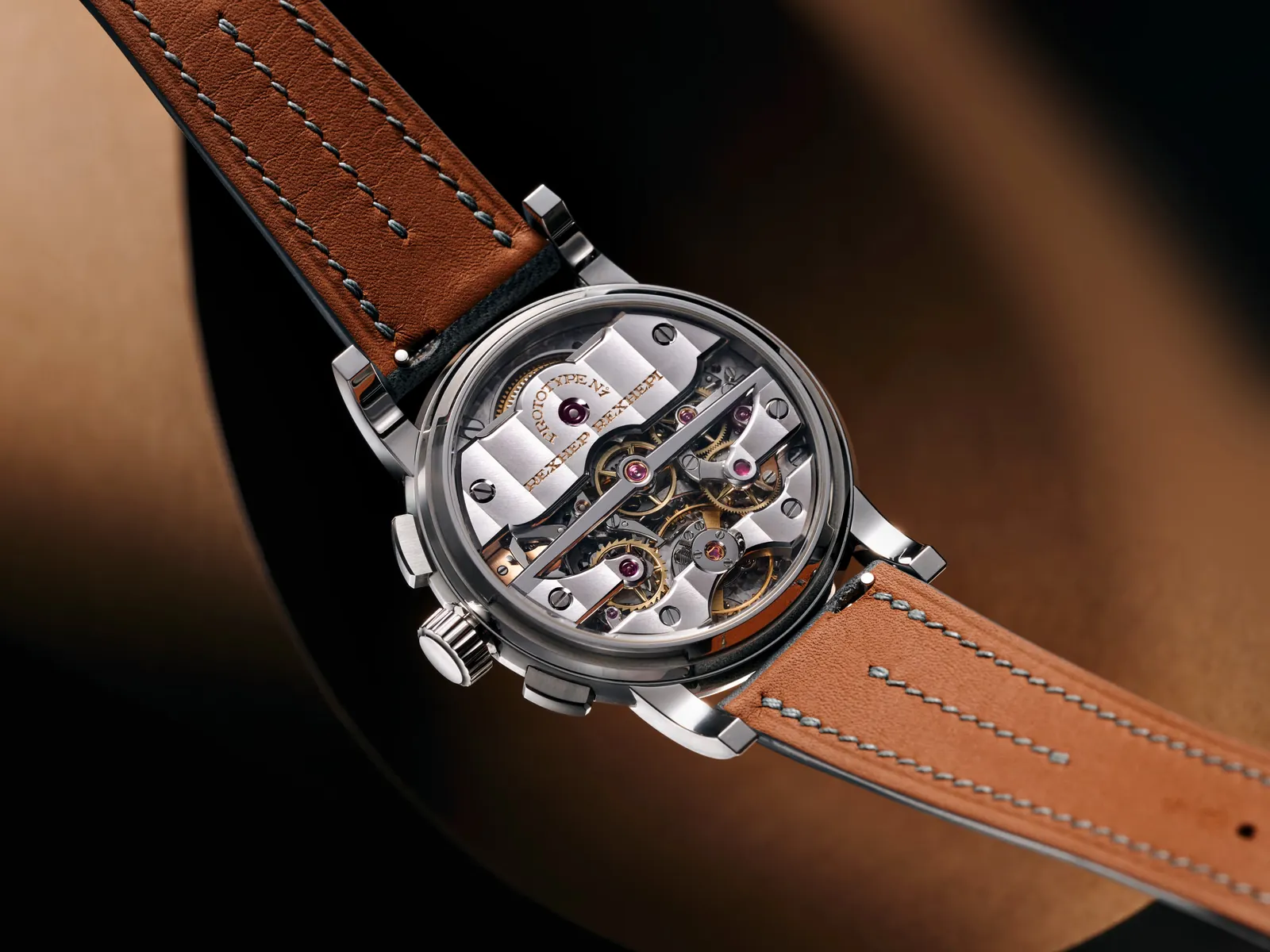
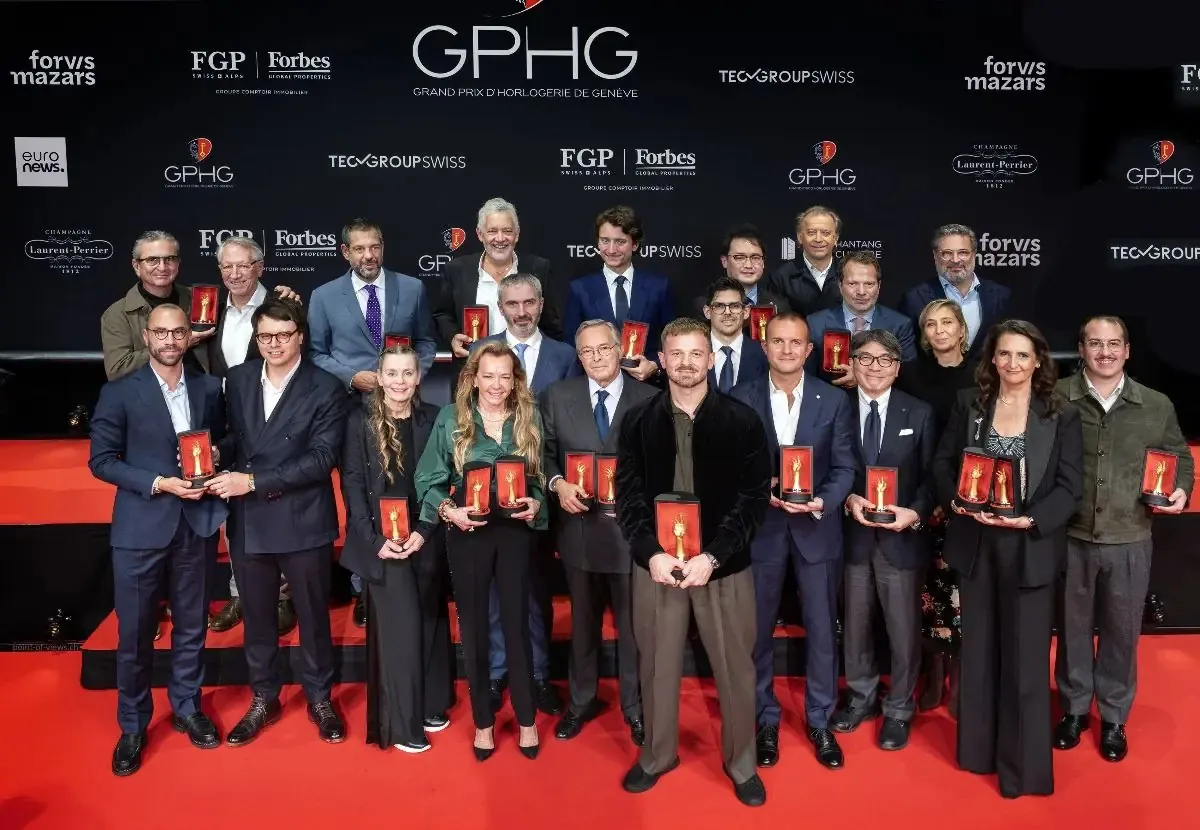
The 26th Grand Prix d'Horlogerie de Genève ended on Saturday 7 November at the Bâtiment des Forces Motrices with its highest honour in independent hands. Rexhep Rexhepi won the Aiguille d'Or Grand Prix for the Chronograph Flyback, the first chronograph to carry his own name. Twenty prizes were awarded in all. The field was first narrowed by an Academy of more than 1,000 members, and the final decisions fell to an international jury chaired this year by Wei Koh. The ceremony was hosted by Stéphane Bern and Arianne Alcorta, and the Director-General of UNESCO attended, a marker of the place watchmaking now holds in the wider cultural heritage conversation.
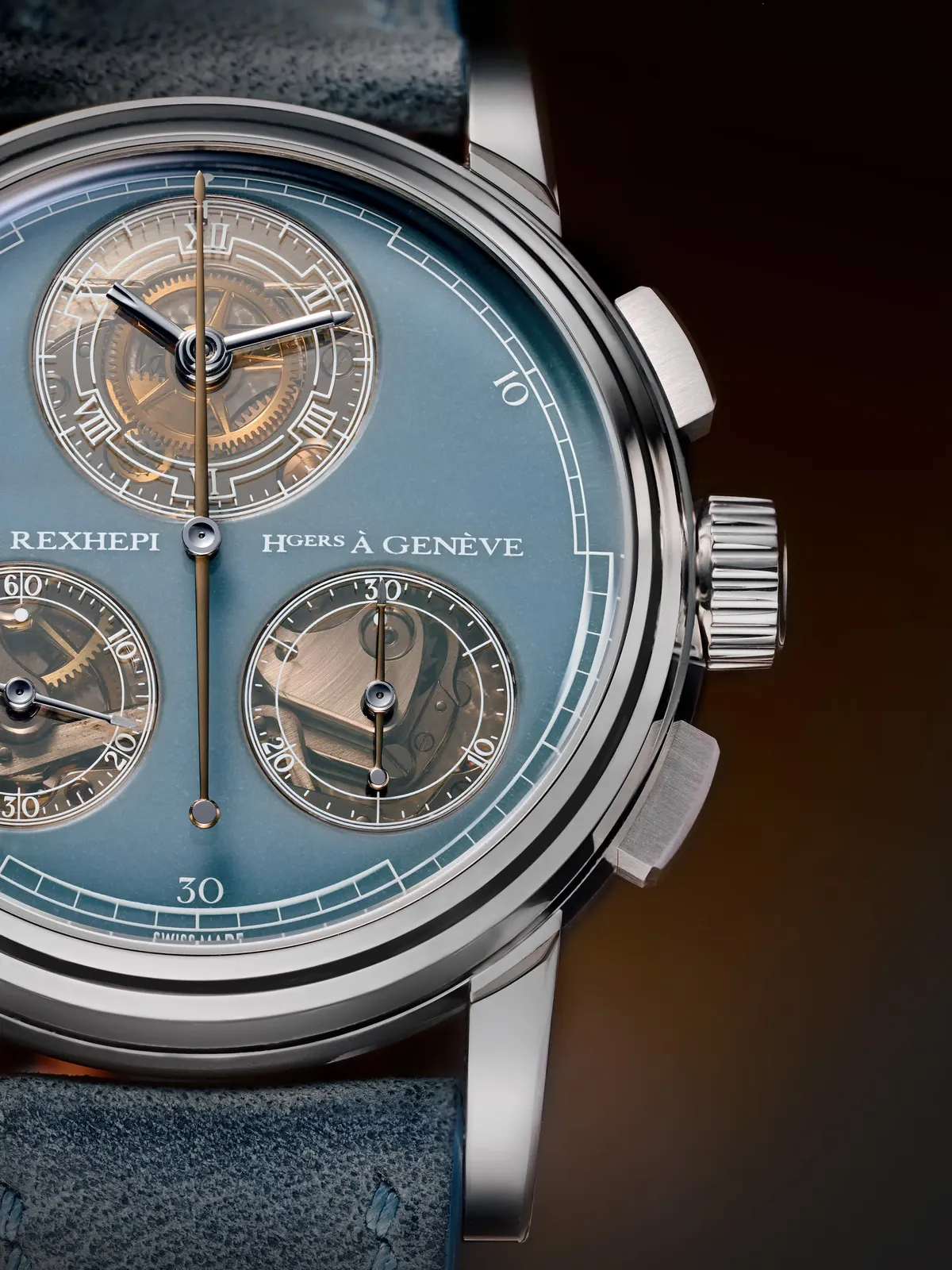
The winning watch is an exercise in compression. The Chronograph Flyback, reference RRCHF, is built around an entirely new hand-wound calibre, integrated rather than modular, governed by a column wheel with a lateral clutch and driving a jumping minute counter alongside the central chronograph seconds hand. The platinum case measures 38.8 mm across and 9.7 mm thick, dimensions closer to a classical dress watch than to most contemporary chronographs. The dial is grand feu enamel made in the maker's own Geneva workshops, storm blue on the platinum edition, with smoked sapphire counters that leave the hand-finished movement partly visible. The calibre totals 320 components and 30 jewels, beats at 21,600 vibrations per hour and holds a power reserve of 72 hours. Rexhepi succeeds Breguet, whose Classique Souscription won the Aiguille d'Or in 2025.
Three houses, two prizes each
The night's pattern was breadth with a few repeat names. Audemars Piguet won the Iconic Watch Prize for the Royal Oak "Jumbo" Extra-thin Selfwinding Flying Tourbillon Chronograph RD#5 "150th Anniversary", and the Calendar and Astronomy Watch Prize for the 150 Heritage pocket watch. Chopard took the Time Only Watch Prize for the L. U. C 1860 and the Jewellery Watch Prize for the Mystery Nut. Ferdinand Berthoud won the Chronometry Prize for Naissance d'une Montre 3 and the Tourbillon Watch Prize for the Chronomètre FB 2TV. The Special Jury Prize went to Patek Philippe, unusually not for a watch at all, but for its Watch Art Grand Exhibition, recognised as an exceptional commitment to watchmaking culture.
The remaining prizes spread across the industry's full range. The Mechanical Exception Watch Prize went to Blancpain for the Grande Double Sonnerie, and the Complication Watch Prize to Cleguer for the Inspiration One, the watch that launches that young brand. Parmigiani Fleurier won the Chronograph Watch Prize for the Tonda PF Chronographe Mystérieux, Grand Seiko the Sports Watch Prize for the Spring Drive U. F. A. Ushio 300 Diver, and Daniel Roth the Essential Watch Prize for the Extra Plat Rose Gold Skeleton. Louis Vuitton took the Artistic Crafts Watch Prize for the Tambour Taiko Arty Automata, Piaget the Gemset Watch Prize for the Swinging Pebble, and Konstantin Chaykin the Audacity Prize for the ThinKing Mystery.
At the accessible end of the list, the jury rewarded small teams and small prices alongside the grandes maisons. Dominique Renaud won the Horological Revelation Prize for the Pulse60 Titanium Black, Otsuka Lotec the "Petite Aiguille" Watch Prize for the No.8, and SpaceOne the Challenge Watch Prize for the SpaceOne X Baltic Seconde Majeure. La Vallée's Cosmo took the Mechanical Clock Prize, a reminder that the Grand Prix still reserves a place for clockmaking. Of the twenty prizes, a clear majority went to independent makers or single-family houses rather than to the large groups.
What happens to the watches now
Geneva keeps the nominated watches a little longer. All 84 are on view at the Musée d'Art et d'Histoire until 15 November, the last stop of an autumn tour that also took them to Mumbai and Bangkok. After that the winning pieces cross to London for six days, 18 to 23 November, at the Watches of Switzerland boutique in Knightsbridge.
Prize lists are arguments about what an industry values in a given year, and the 2026 list argues for restraint. The Aiguille d'Or went to a 9.7 mm chronograph with an enamel dial and no spectacle complication, made by a small Geneva workshop whose grand feu enamel dials are produced in-house and whose calibre is entirely its own. On the same Geneva weekend, the auction market set its own record a few streets away. The jury's answer to that noise was a quiet watch, finished by hand, and it is difficult to read the choice as anything other than deliberate.