There is a particular courage in a watchmaker known for complications choosing to make a three-hander. Petermann Bedat, founded in 2017 by Florian Bedat and Gael Petermann after the two met in watchmaking school and worked together at A. Lange & Sohne, built its reputation on difficult things: a deadbeat seconds for its debut, then a split-second chronograph. The Reference 1825, presented in October 2025 with deliveries beginning in 2026, displays nothing more than hours, minutes and seconds.
The simplicity is the point, and it is not simple. The 1825 houses the brand's first fully in-house movement, the calibre 233. The earlier calibres were developed with Dominique Renaud, the co-founder of Renaud & Papi and one of the industry's best-regarded technical minds. This time the workshop, now eight watchmakers and two finishers in Renens, went entirely on its own. For a brand of this size, designing a movement from a blank page, with no existing architecture to lean on, is the hardest thing it can attempt. A three-hander offers nowhere to hide: every bridge, every wheel, every proportion is visible and judged.
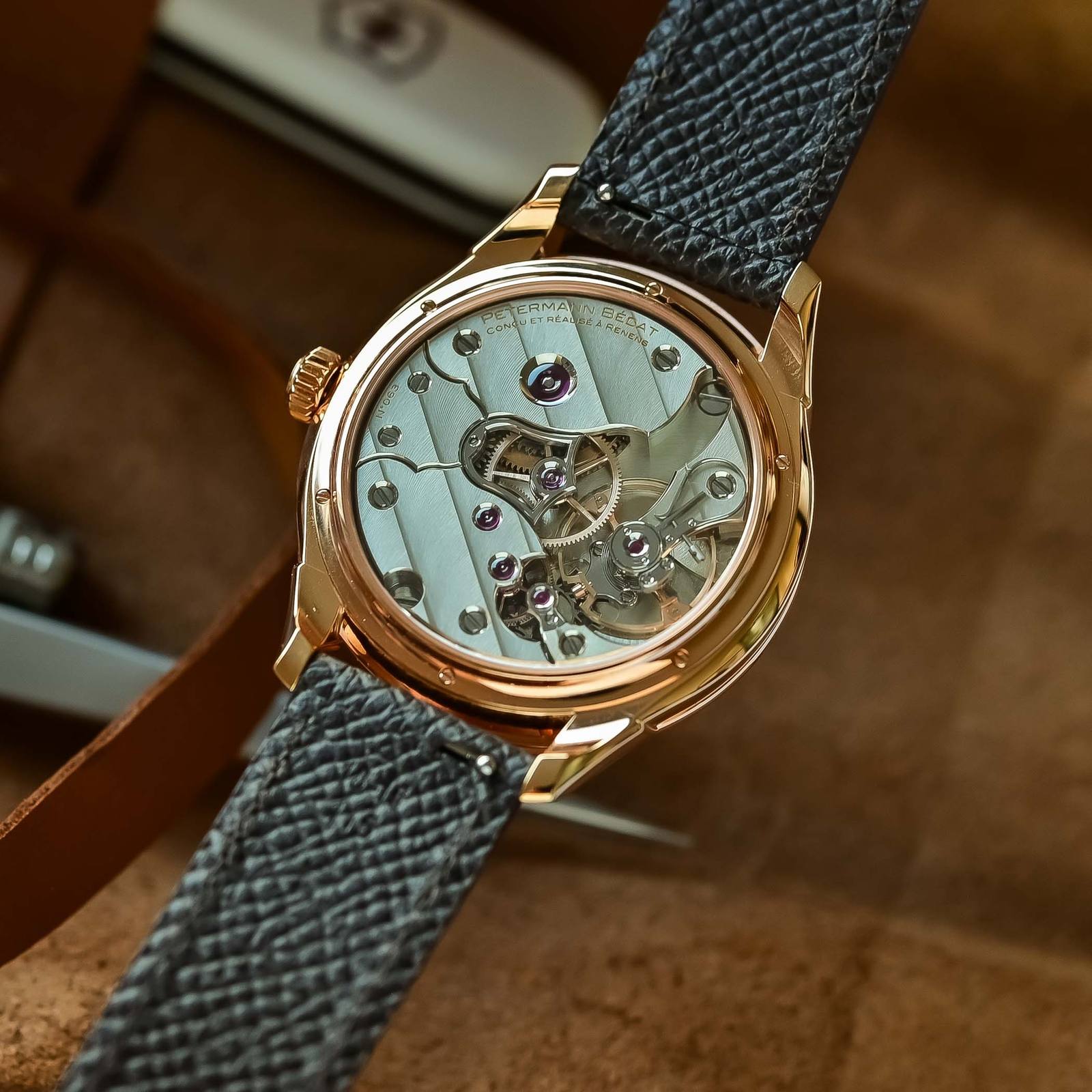
The architecture draws on the pocket watches Petermann and Bedat restore in their workshop: a symmetrical layout organised around a bell-shaped openworked steel centre bridge, oversized ruby bearings, wide Geneva stripes, a swan-neck regulator and, in a first for the brand, wheels made in solid gold. The calibre runs at 18,000 vibrations per hour, the traditional slow beat that gives the seconds hand its calm, deliberate sweep, with a 56-hour power reserve. Notably, the swan-neck regulator is reported to be purely decorative, with no functional role, a detail that will divide purists and that the duo have been open about.
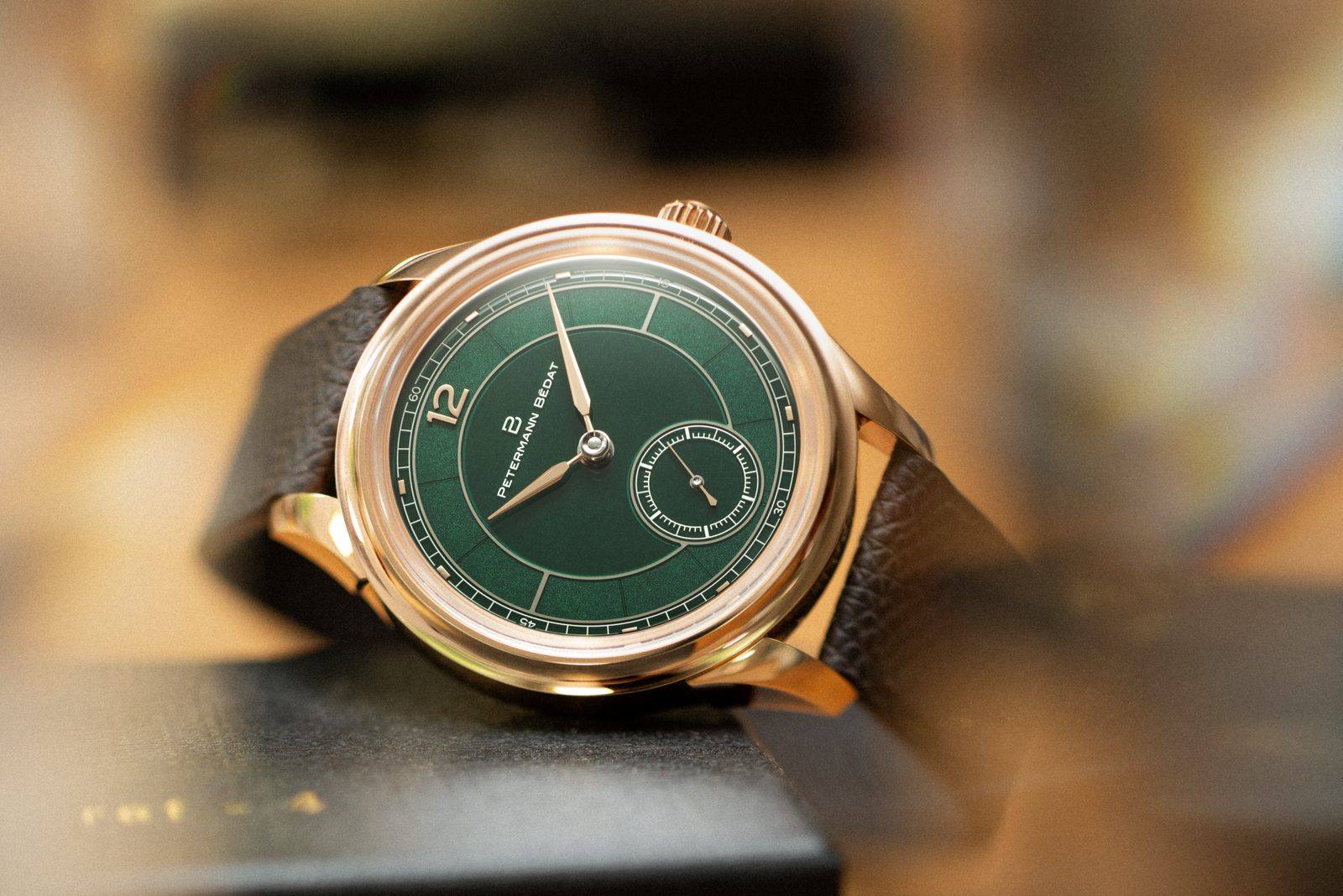
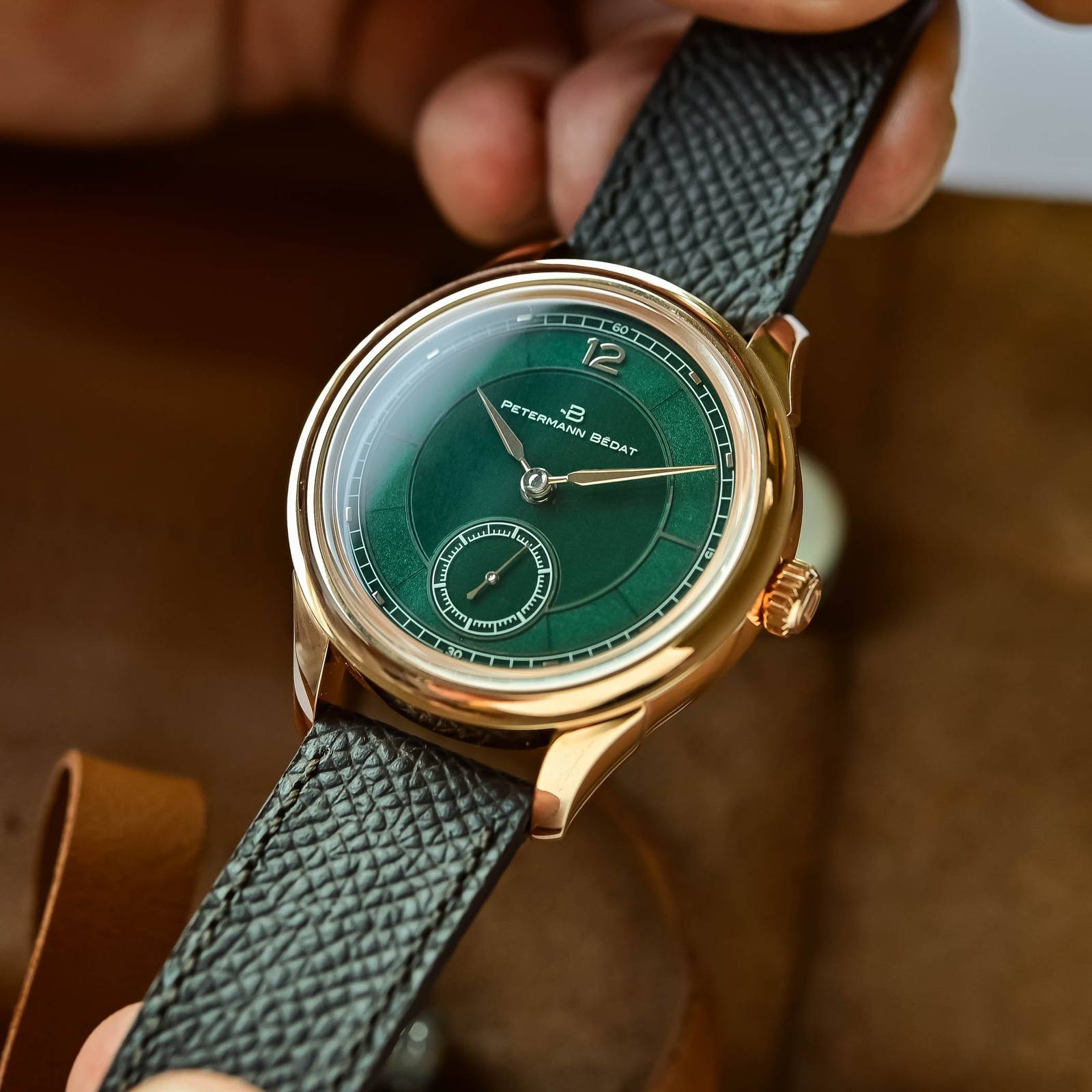
The 38mm case, 10.15mm thick in white or rose gold, carries the brand's first closed dial: green enamel with subtle sector lines, polished applied markers at twelve, and a small seconds at six, with faceted spade-shaped hands. It is a complete visual departure from the openworked dials of the earlier pieces, and a bolder colour choice than the brand's previous all-silver classicism. The price is CHF 75,000 excluding taxes, with production limited to what can be made over four years, 2026 to 2029, at a reported rate of about fifty watches a year. Pre-orders were initially opened for the first two years only, a deliberate choice to avoid building waiting lists that stretch beyond what the workshop can deliver.
The deadbeat seconds of the debut watch deserves a word, since it explains the duo's reputation. A deadbeat, or jumping seconds, moves the seconds hand in discrete one-second steps like a quartz watch, but mechanically, which requires an additional mechanism to hold and release the train each second. It is a complication with real historical roots in precision timekeeping, and choosing it for a first watch was a declaration: this is a workshop interested in mechanics, not marketing.
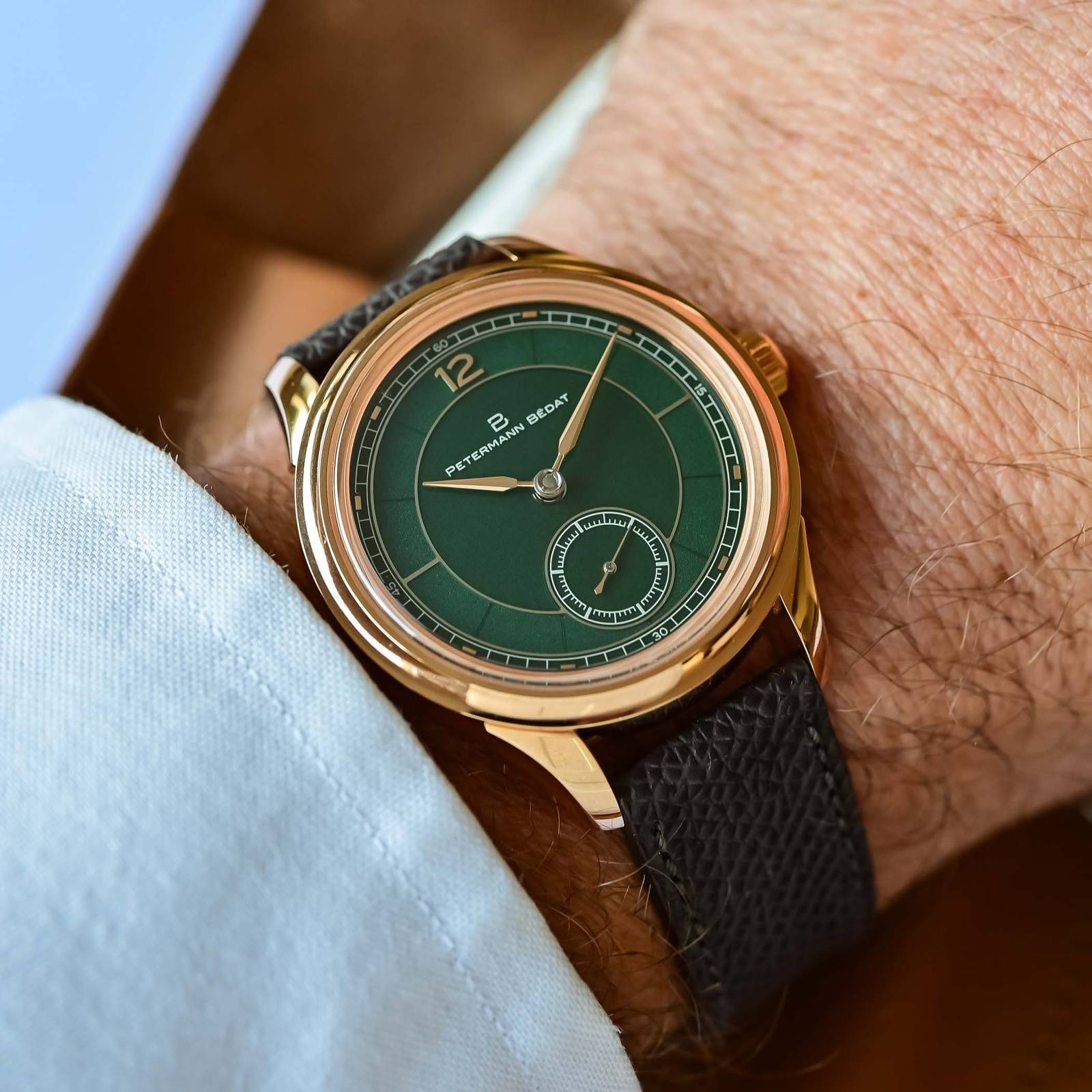
In May 2026 the duo added the Reference 1826 for The Hour Glass in Japan, shrinking the same watch to 36mm in white and rose gold, proof that the calibre was designed with smaller cases in mind from the start, even if the market was not thought ready. The trajectory, from deadbeat to rattrapante to time-only, reads like a watchmaker gaining confidence in reverse: the fewer the complications, the less there is to hide behind, and the more the finishing has to carry. On the evidence of the 1825, it carries it well.