The world-time wristwatch exists because of Louis Cottier, whose system for displaying all twenty-four time zones at once, read against a fixed 24-hour ring, was introduced in the early 1930s and quickly adopted by Patek Philippe. The reference 2523, produced from 1953, is the mature expression of the idea: two crowns, the upper controlling the rotating city disc, the lower setting the local hour, so the wearer can read the time anywhere on earth at a glance. The double crown is not decoration; it is the mechanism made visible.
Most 2523s carry printed dials. A tiny number were fitted with polychrome cloisonne enamel maps, each one a miniature painting built up from coloured glass powders and fired in a kiln, each one unique. Cloisonne on a watch dial is among the most demanding of the metiers d'art: the wires that separate the colours are hair-thin, the firing must be perfectly controlled, and a single flaw means starting over. That Patek Philippe entrusted its most technically sophisticated travel watch to its most artisanal dial craft tells you how the manufacture ranked the reference.
The 'South America' example that headlined Phillips' Geneva Watch Auction XXIII on 9 May 2026 is a 1953 watch in 18k yellow gold whose dial depicts the South American continent in enamel. It is one of only two examples known, and it had appeared at public auction exactly once before, in 1988. Thirty-eight years between auction appearances is itself a kind of provenance: this is a watch that trades by surfacing, not by circulating.
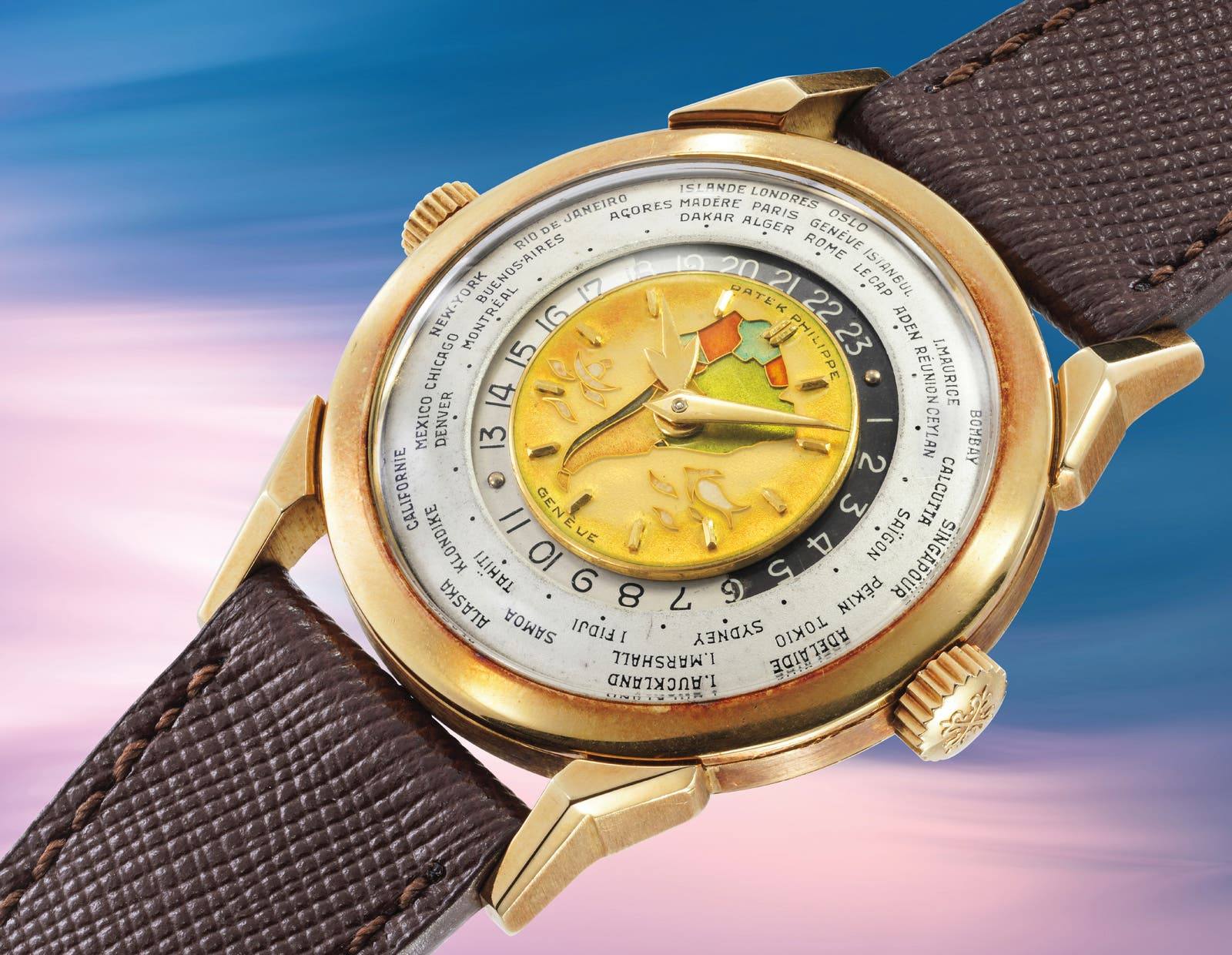
Estimated in excess of CHF 5 million, it sold for CHF 7,961,000 (US$10,247,000), a world auction record for the reference. It is only the second vintage Patek Philippe wristwatch ever to exceed US$10 million at auction, surpassed only by the stainless steel reference 1518 Phillips sold the previous November. The bidding, in a packed room with telephone competition, narrowed to an extended battle before the watch sold to the room.
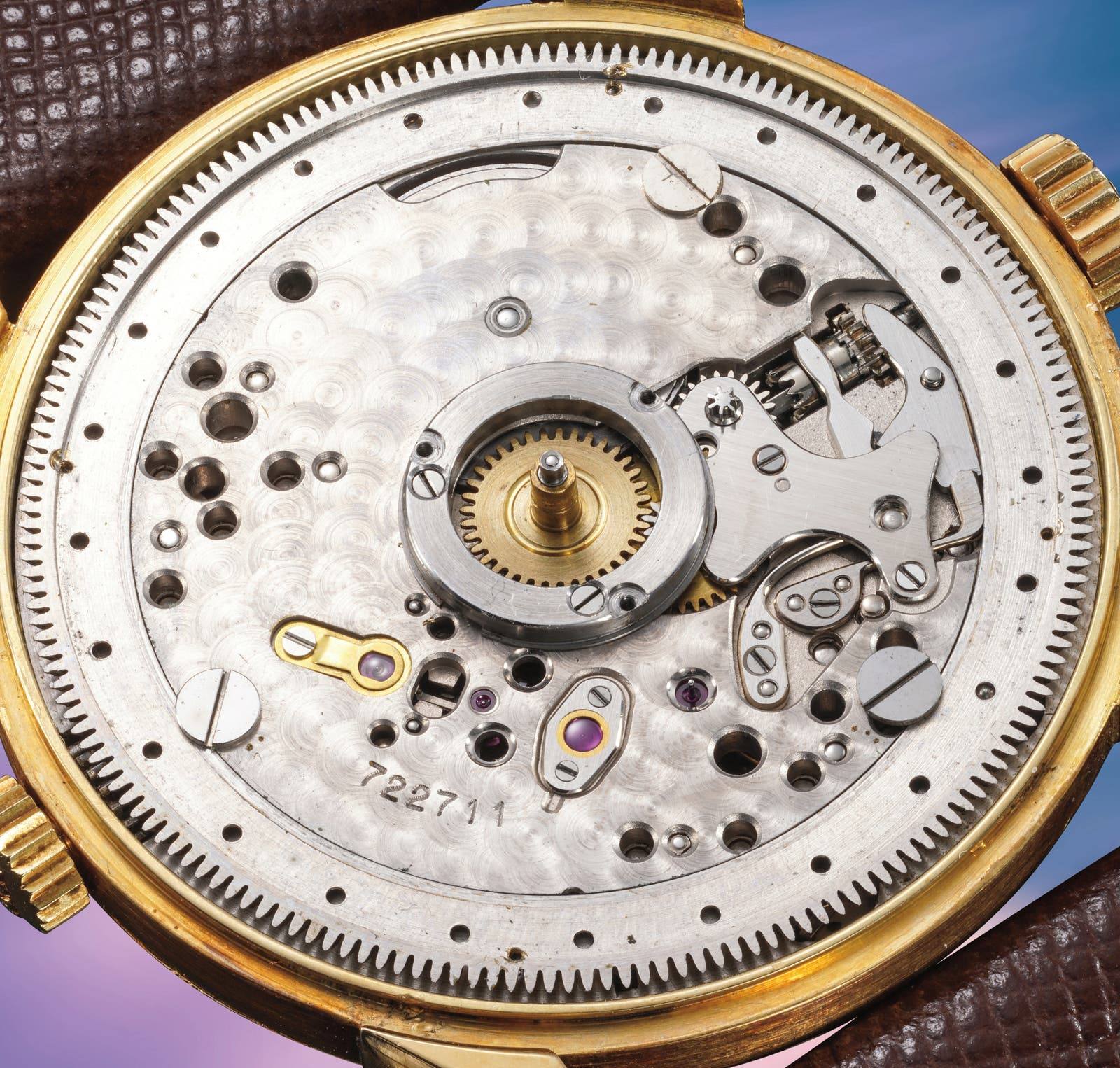
The world timer as a category has been one of the great beneficiaries of the vintage boom. Cottier's system, elegant in its simplicity, translates beautifully to the wrist, and the references that carry it, from the early reference 1415 of the 1930s through the 2523 and its successors, have become some of the most studied watches in collecting. The enamel-dial examples stand apart even within that company: where most world timers are admired for their mechanics, these are admired as objects, closer to miniature paintings that happen to tell the time in twenty-four cities.
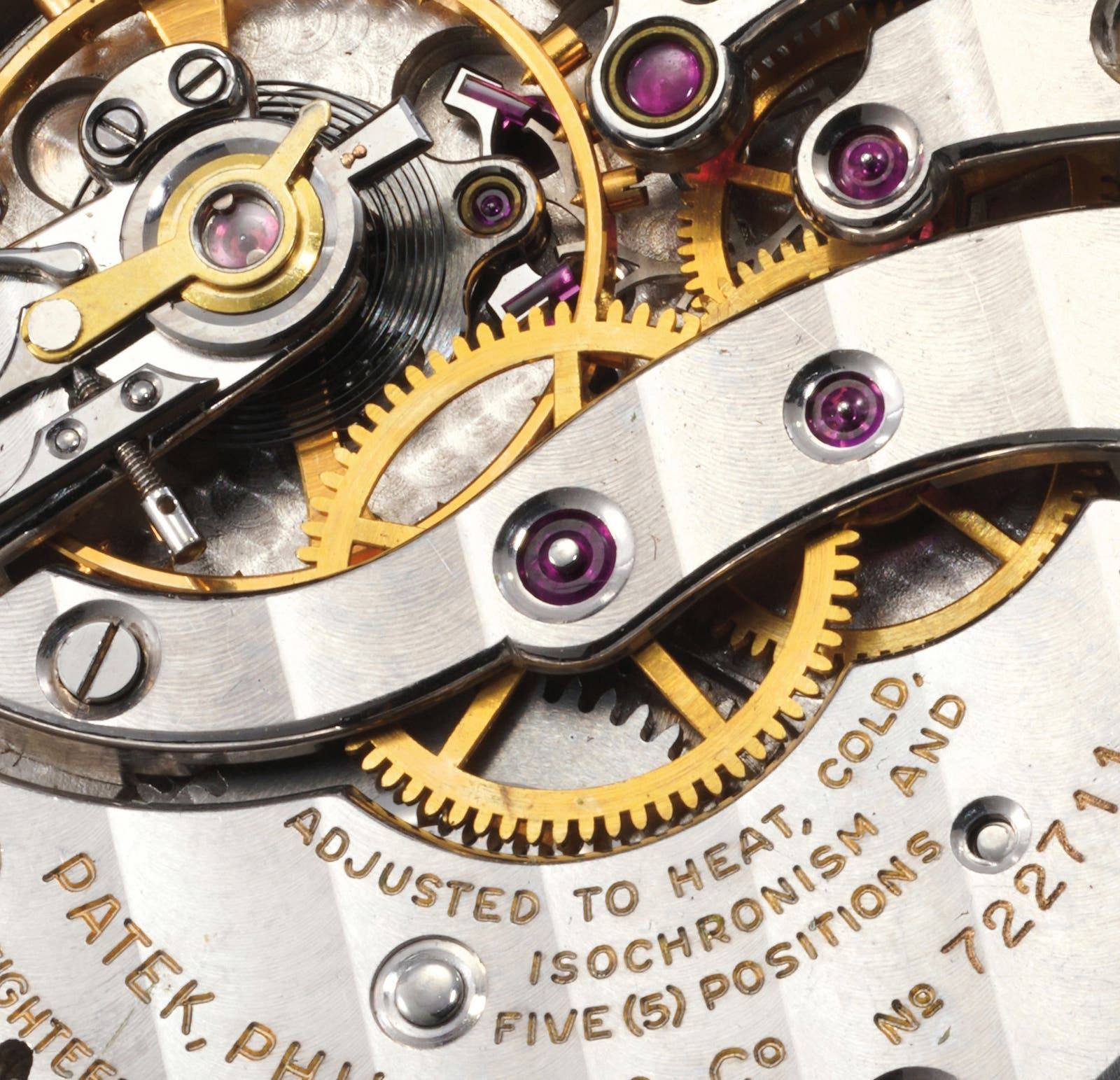
What the result confirms is how the vintage market now values the intersection of three things: a historically significant reference, a dial that is effectively a work of art, and provenance that can be documented without gaps. The 2523 'South America' has all three in unusual concentration. Watches like it do not set the market; they reveal it. When one surfaces, the price it achieves becomes the new reference point against which every other world timer, enamelled or otherwise, will be measured.