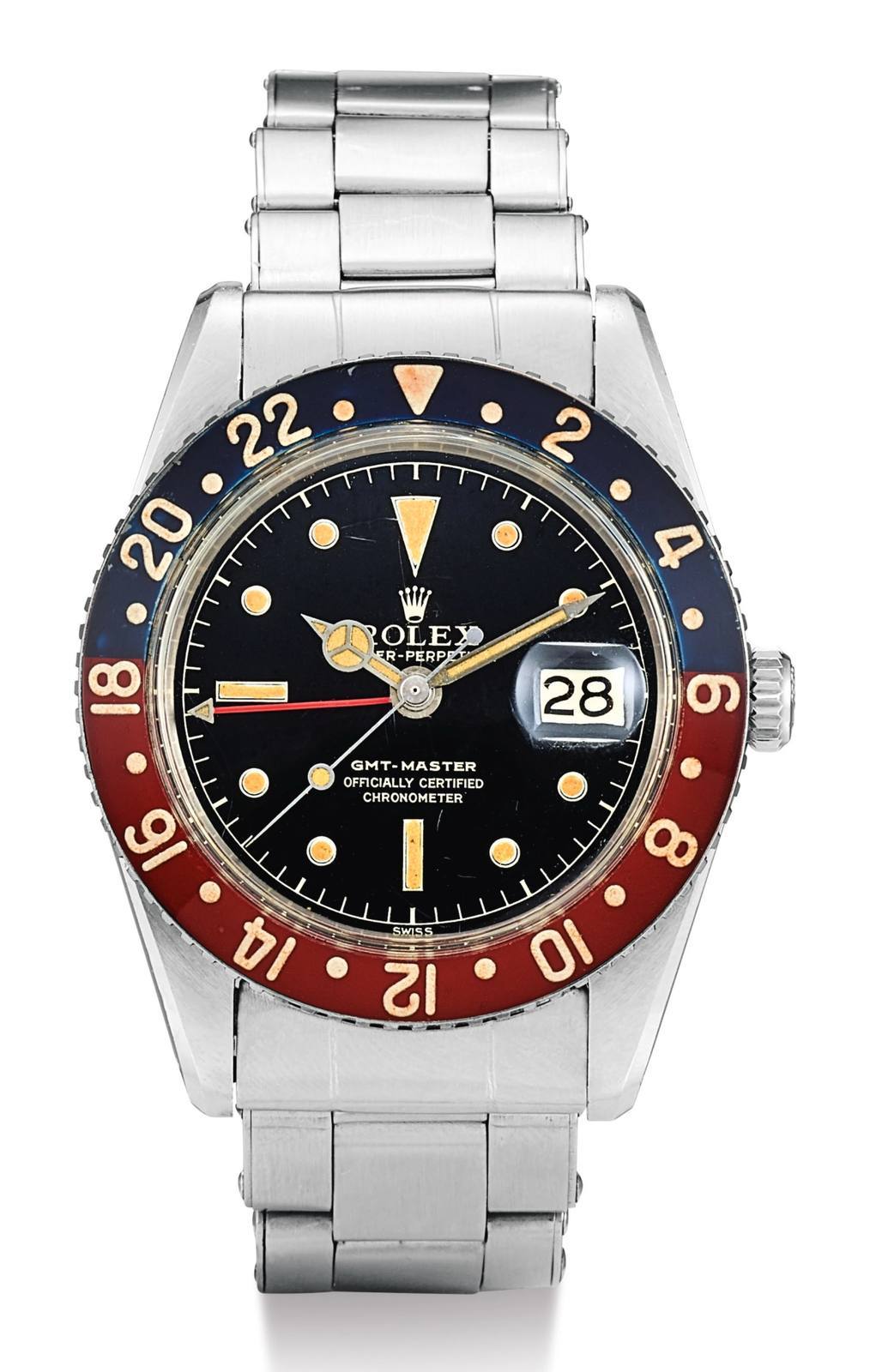
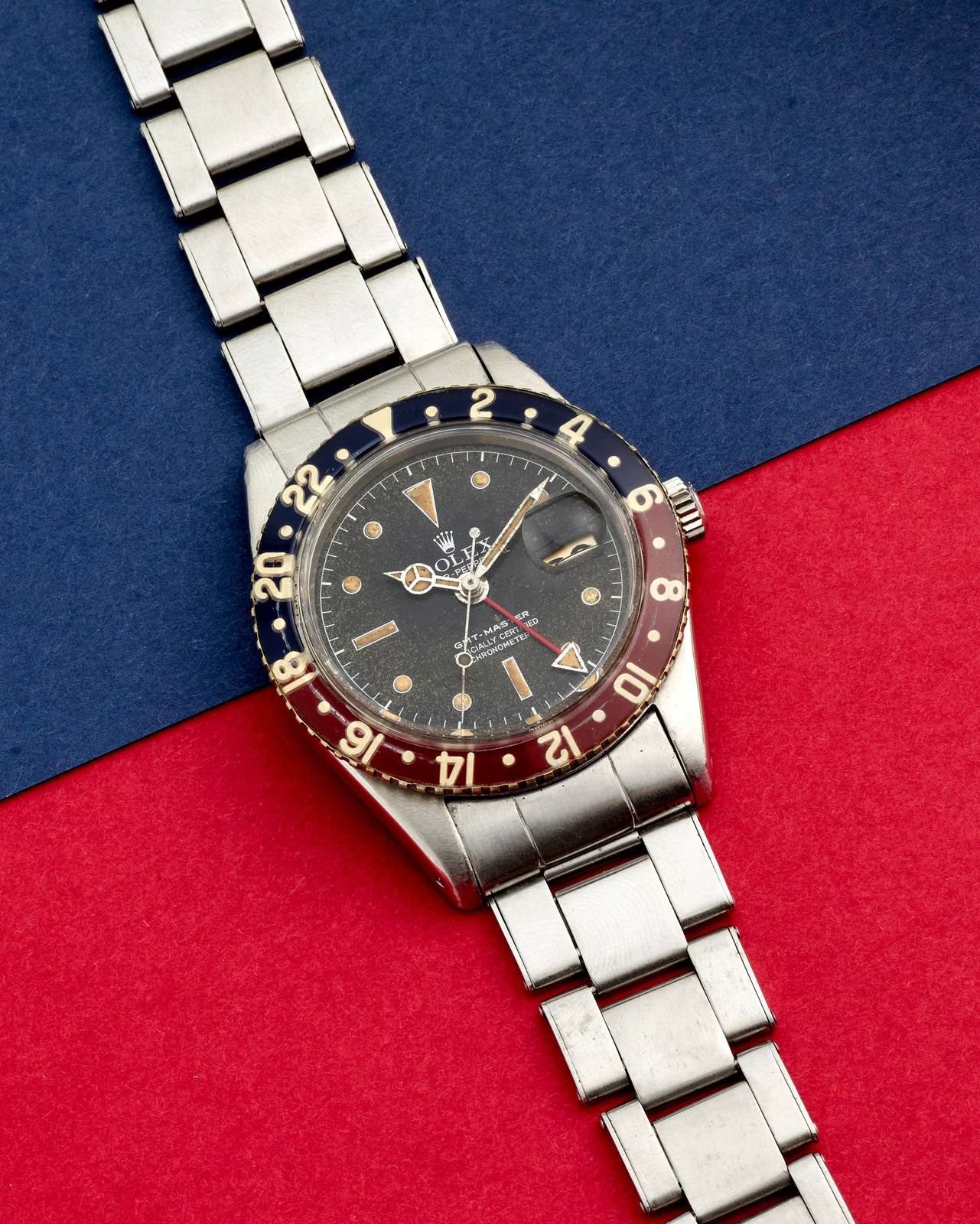
Launched in 1954, the reference 6542 is a cult watch, as it was the first GMT-Master model produced by Rolex. Sold only until 1959, it is a rare reference in the world of collector's watches. Originally developed for the pilots of Pan-American airlines, the GMT-Master was a revolutionary tool watch when it launched, allowing the wearer to read a second time zone through a fourth, 24-hour hand working against a two-tone rotating bezel. That bezel is what made the 6542 an icon, and what made it fragile.
The insert was Bakelite, an early plastic, in the now-famous red and blue. The two-tone graduation distinguished day from night hours, and the Bakelite allowed for luminous numerals, so the time could be read in the dark, a genuine aid for pilots. It was also, unfortunately, a brittle material that could easily chip or crack when the watch was dropped or knocked against an edge. Particularly fragile, the Bakelite insert is the detail that defines the 6542's collectability today: a well-preserved bezel makes the watch.
Rolex developed the dual time zone watch in conjunction with Pan American Airways so their personnel could tell both local and home time while traveling. As jet engines made intercontinental travel common, flight staff and traveling executives needed to monitor time across zones, and the GMT-Master's answer was ingenious: a rotating bezel graduated to twenty-four hours working with the extra centre hand, the fourth hand, set to stay on Greenwich Mean Time, which is where the model takes its name.
Within a few short years, Rolex replaced the Bakelite with a far more resilient insert. In 1959 the reference 1675 succeeded the 6542, swapping the Bakelite bezel for metal and adding crown guards to the case, along with an upgraded movement. The model became an icon for sophisticates, with an international allure that put it on the wrist of Pussy Galore in the 1964 James Bond film Goldfinger.
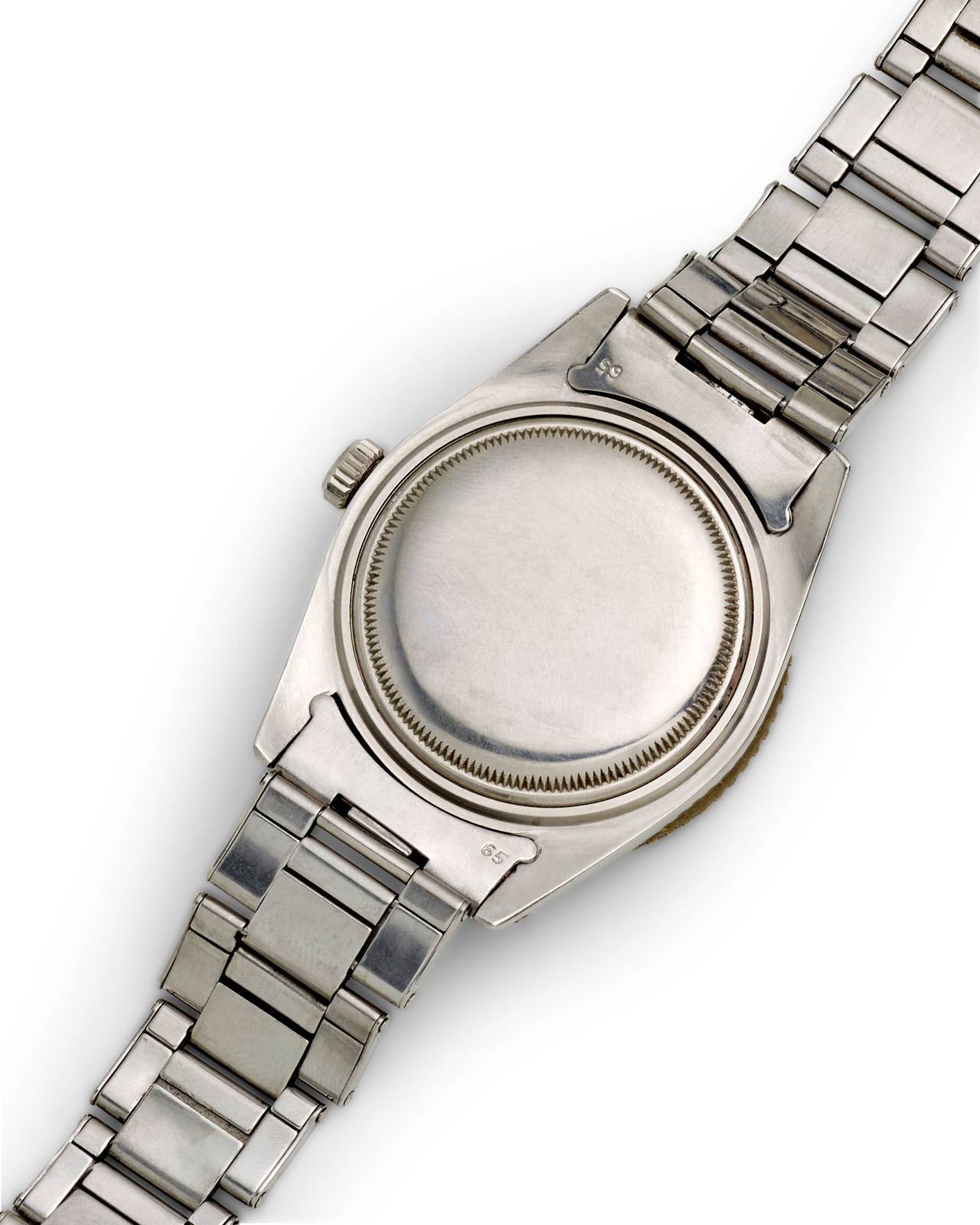
The 6542's short production run, from 1954 to 1959, is exactly why collectors prize it. It is the first GMT-Master, built for Pan Am's pilots, carrying the only Bakelite bezel Rolex ever fitted to the line. The material that was supposed to absorb shocks became the reason the watch is precious: because so few bezels survived intact, a 6542 with a perfectly preserved insert is one of the great trophies of vintage Rolex collecting, the fragile original that the tougher successor could never replace.