Cartier arrived at Watches and Wonders 2026 leaning into what it does better than anyone: shapes. The headline acts were two, and they pulled in opposite directions. The Roadster, the automotive-flavoured line introduced in the early 2000s, returned after years of quiet in seven new references. And the tenth Cartier Prive presentation, the collection's annual gathering of the maison's historic forms, gave the Crash its most extreme reworking yet: a skeletonised version in platinum built around a movement shaped like the case itself. Between the accessible and the unobtainable, the message was unmistakable: no one else in Geneva owns shapes the way Cartier does.
The Roadster, back from the 2000s
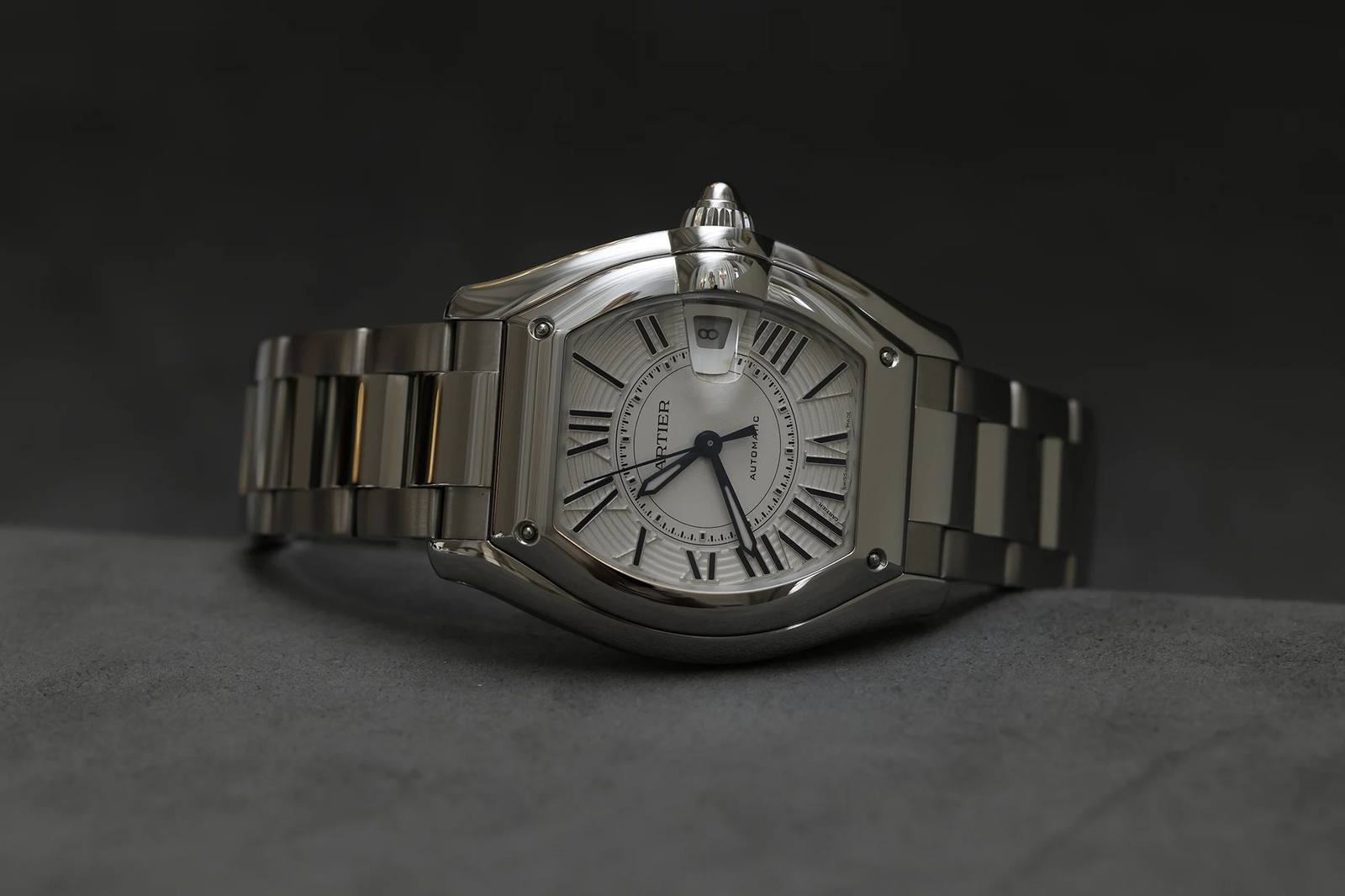
The Roadster was always the least formal of Cartier's shapes, a watch designed around the codes of the automobile. Its dial reads like a speedometer, its crown is shaped like a headlight, and that crown flows directly into the date magnifier in a single uninterrupted curve, one of the cleverest integrations of a functional detail in modern watch design. The 2026 return keeps all of that and rebuilds the rest. The range spans two sizes, 47 by 38 millimetres and 42.5 by 34.9 millimetres, in steel, two-tone and full yellow gold, with the larger watches running on the automatic calibre 1847 MC and the smaller ones on the automatic calibre 1899 MC.

The update is more than a reissue. A new three-link bracelet and a rubber strap option, both with the maison's QuickSwitch system for tool-free changes, bring the Roadster in line with how watches are actually worn now, and the seven references give the line a real range for the first time: from the smaller steel model at US$9,300 to the larger gold version at US$57,000. The Roadster was a fixture of the 2000s, and its return suggests Cartier has noticed that the generation that grew up with it is now buying watches seriously.
The Crash goes skeleton
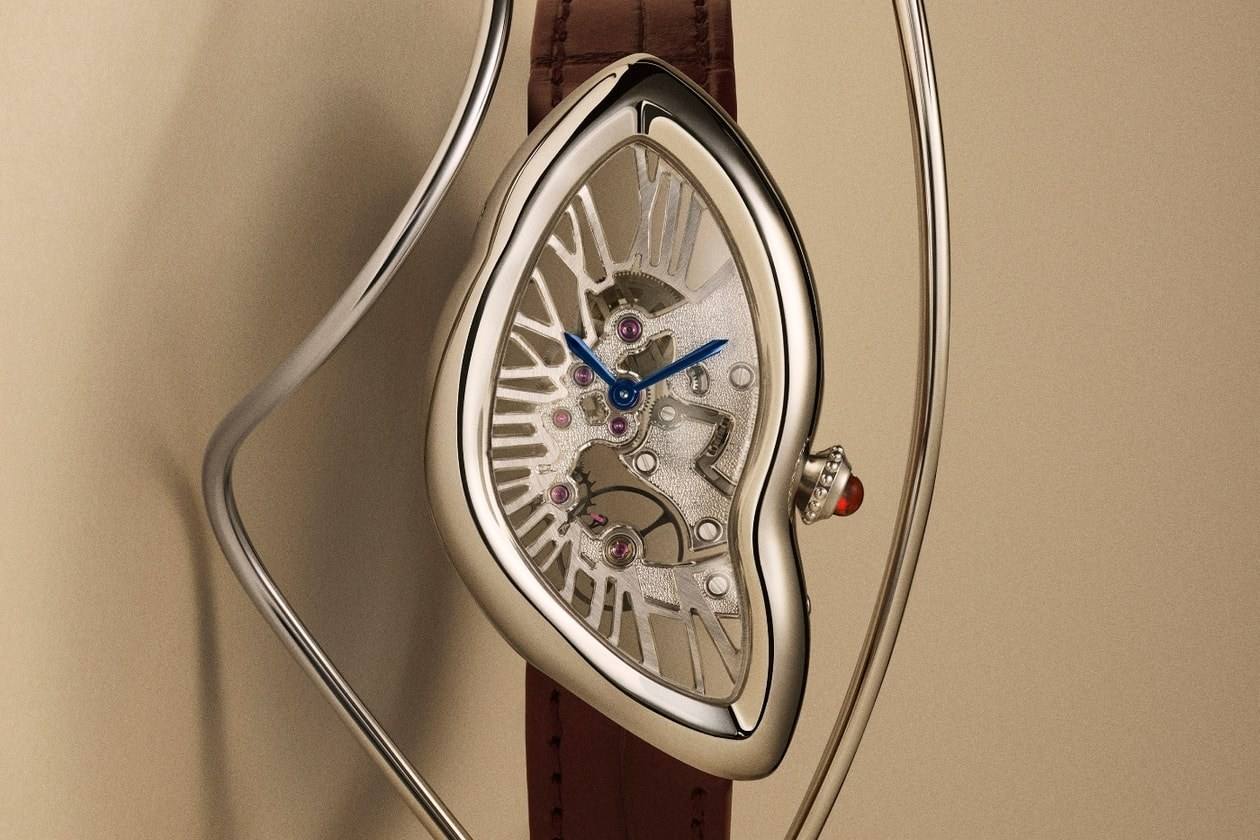
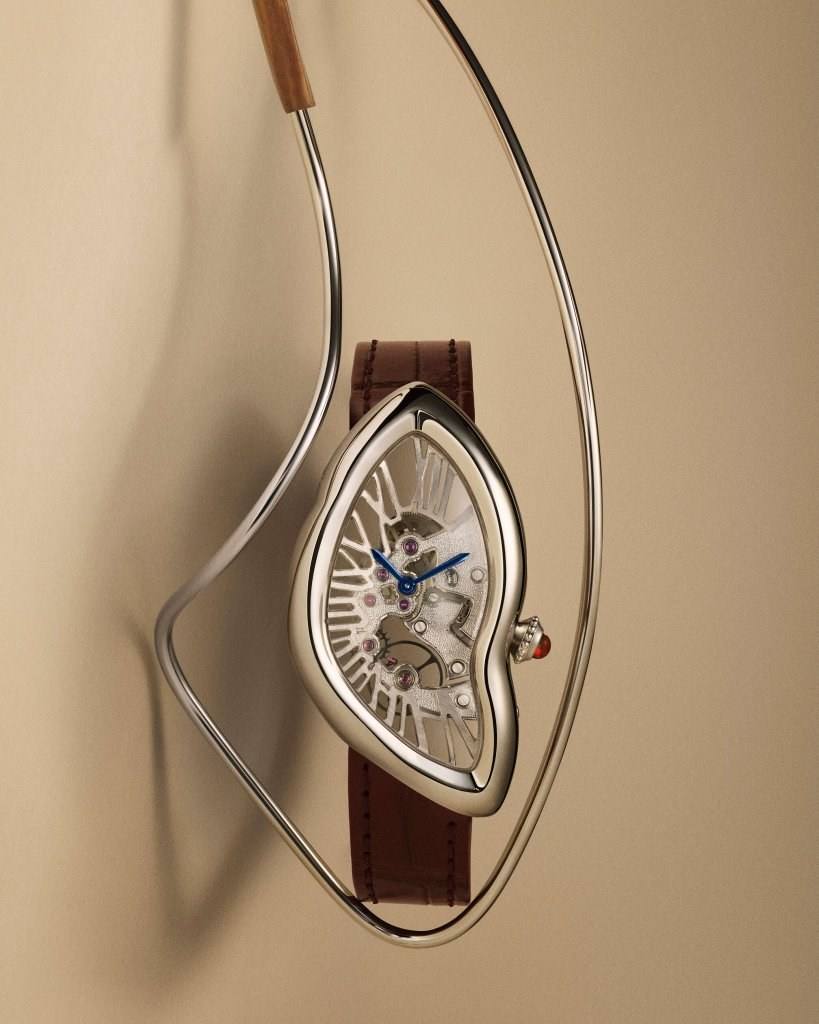
The tenth Cartier Prive opus gathered the Tank Normale, the Tortue Chronographe Monopoussoir and the Crash Squelette, and it is the Crash that carries the news. First created in 1967, the Crash remains the most sculptural shape in Cartier's catalogue, a case that looks melted and that collectors treat as the maison's purest expression of form over function. For 2026 it has been given the manufacture calibre 1967 MC, a movement cut to the shape of the Crash case itself, which is a harder trick than it sounds: a shaped calibre has to fit an irregular case while remaining legible and serviceable.
The openworking is more extensive than on previous Crash iterations, with Roman numerals incorporated directly into the movement's architecture rather than applied to a dial, and the bridges are reported to have been hammered by hand, a texture that plays against the polished bevels. The platinum case carries burgundy detailing and blued-steel hands, with a ruby cabochon set into the crown, and the edition is limited to 150 numbered pieces. It is the Crash at its most extreme and, paradoxically, its most honest: a watch that was always about the case now has a movement worthy of it.
La Collection and the shapes doctrine
Elsewhere in the 2026 presentation, La Collection added the Tank Normale, the Cloche and the Tank Cintrée, all in yellow gold, continuing the programme of returning historic shapes to the permanent catalogue rather than rationing them as limited editions. It is the first full Watches and Wonders under Louis Ferla, who took over leadership of the maison in September 2024. If this year is the template, the Ferla era will be defined by confidence in the archive: the Roadster for the many, the Crash Squelette for the few, and the quiet understanding that Cartier's back catalogue is deeper than anyone else's in the business.