Enamel is glass. That single fact explains both the beauty of an enamel dial and the difficulty of making one. Crushed mineral glass, ground to powder and washed clean of impurities, is applied to a thin metal disc and fired at 800 to 900 degrees Celsius until it liquefies and fuses with the metal. Done well, the result is a surface of extraordinary depth whose colours will not fade with time. Done slightly wrong, it is a dial fit only for the bin.
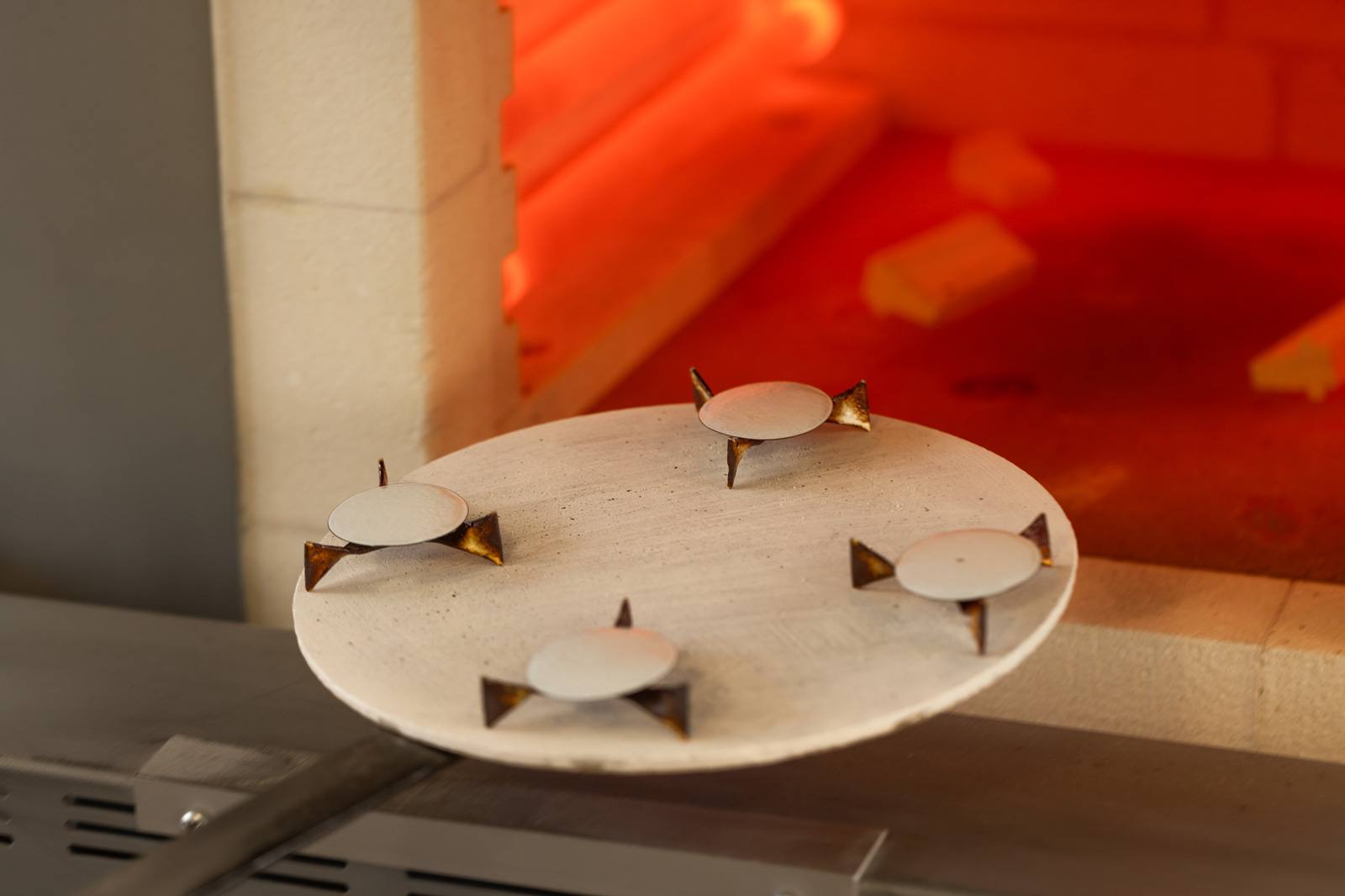
The most common technique in watchmaking is grand feu, French for great fire. The process, described in detail in a 2026 issue of the trade publication Horological Herald, begins with a thin copper disc cut and formed to the dial's curvature, with two small copper feet pinned and soldered by hand so the finished dial mounts perfectly to the movement. The enamel powder is ground and washed in water to remove impurities, then applied in thin layers to both sides of the disc. Coating the reverse is not decorative: it balances internal tension during firing, which is essential for stability.
Each layer is fired separately, and the dial may go through the kiln many times before it is finished. Humidity, temperature and a speck of dust in the workshop air can ruin a piece. The Herald's account is blunt about the economics: most dials do not survive the first few firings. The ones that do are then printed, layer by layer, with the dial's markings.

The hardest colour is blue
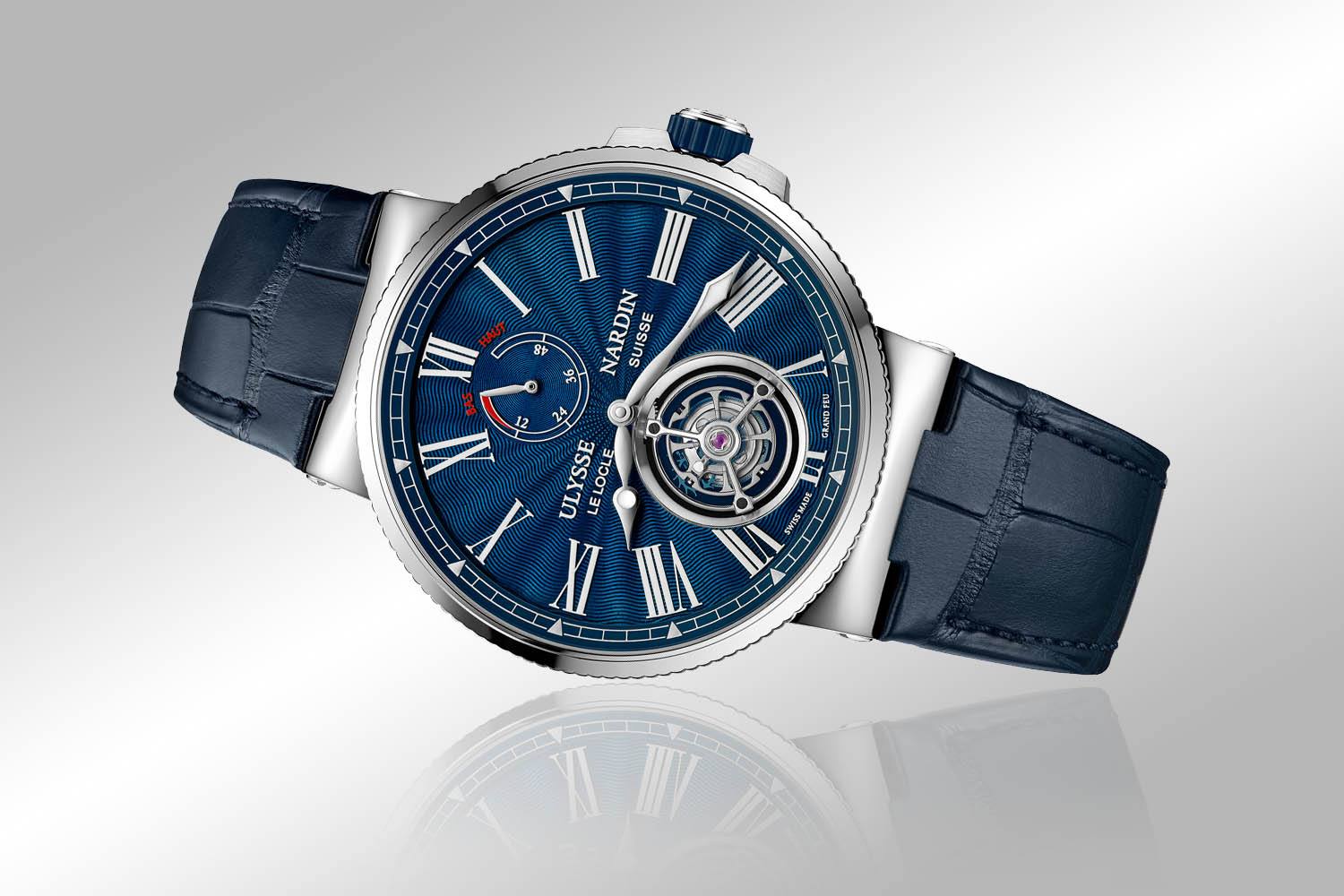
Some colours punish the enameller more than others. A deep oceanic blue, achieved by laying guilloché under translucent blue enamel, is among the toughest to produce, and among the most sought after. One long-running specialist is Donzé Cadrans in Le Locle, Ulysse Nardin's own enamel atelier, which has produced blue grand feu dials for the brand's Marine Tourbillon line.
Donzé also supplies independent brands. Louis Erard's Le Régulateur Grand Feu Enamel, for example, uses a Donzé-made dial and carries the hallmark "Fabriqué en Suisse émail grand feu" inscribed along the dial edge between seven and nine o'clock, a small declaration of how the dial was made.
The painters
Where grand feu is about colour and depth, miniature enamel painting is about the hand. Anita Porchet, born in La Chaux-de-Fonds, was introduced to the art of miniature enamelling by her godfather at the age of twelve. She took her diploma from the School of Applied Arts in 1984 and went on to study fine arts in Lausanne, learning a trade, as she has put it in interviews, that was at the brink of extinction. Her work for Patek Philippe, which she has credited with sustaining the craft through decades when there was no demand for it, is widely regarded as setting the standard for the discipline.
Jaquet Droz, whose Ateliers d'Art in La Chaux-de-Fonds work across painting, engraving and enamelling, offers a clear view of the techniques combined. Its Petite Heure Minute Pink Flamingo sets a hand-painted bird against a black grand feu enamel ground; the dial is painted by hand under a microscope and takes at least a week to produce for each of the 28 pieces. Its paillonné pieces, the Fleur de Lys and Fleur de Vie, place motifs cut from thin gold leaf onto the dial one by one, then cover them with a translucent layer of enamel and fire the whole, freezing the design in glass. The Grande Seconde Paillonnée Fleur de Lys, reference J003033437, is a 43 mm red-gold watch limited to eight pieces, with 68 hours of power reserve.
None of this can be industrialised, which is precisely the point. Every grand feu dial develops its own organic variations in the kiln; no two are ever alike. In a market that rewards consistency, the enamel dial is the deliberate exception: a surface that can only be made by hand, at temperatures that destroy almost everything they touch.