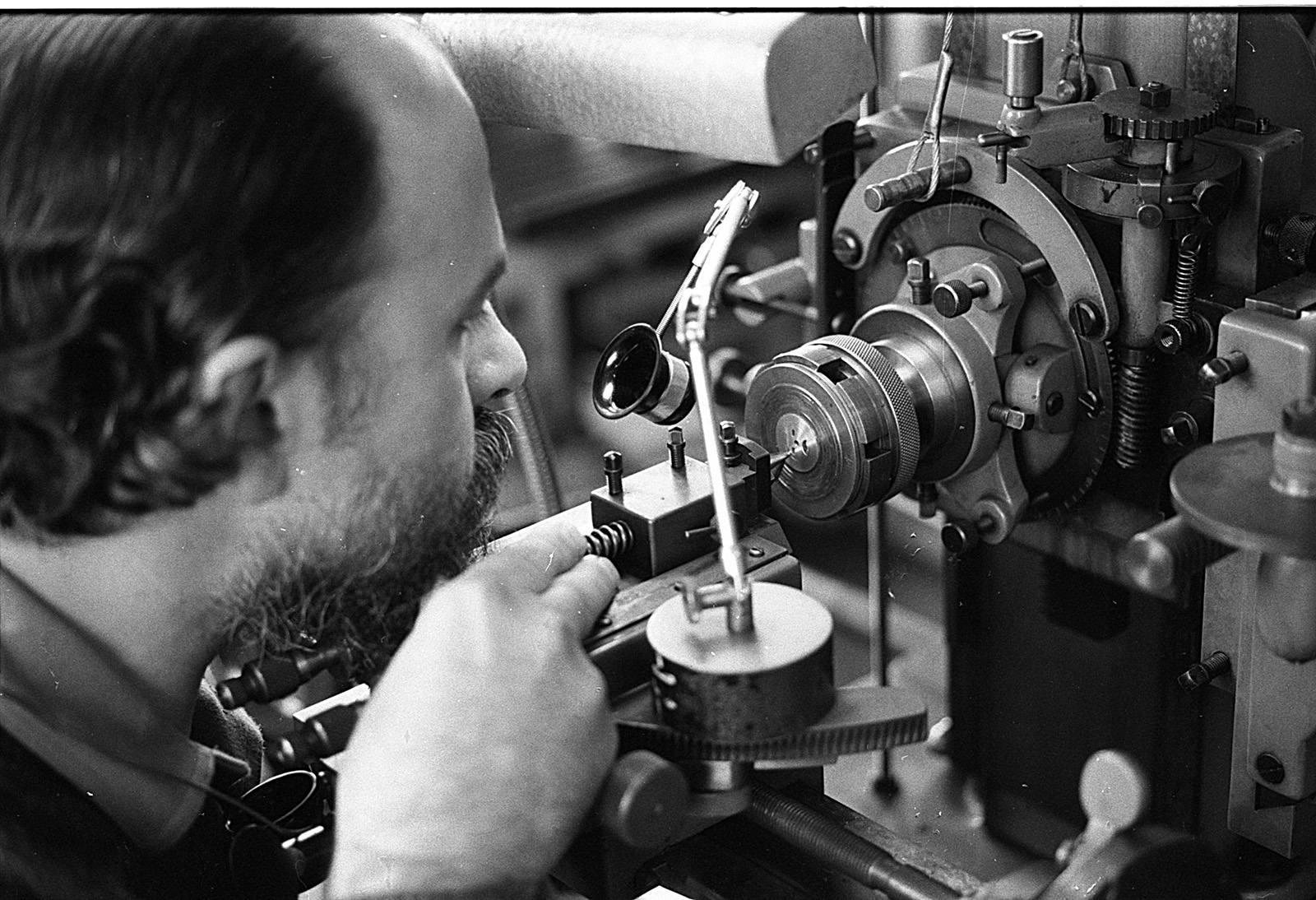
Guilloche is engraving with a machine, which sounds like a contradiction until you see it done. A rose engine lathe, a descendant of 18th-century precision machinery, cuts repeating geometric patterns into metal with a rotating cutter while the workpiece moves against it in controlled oscillation, tracing rosettes and geometric phasing that the human hand alone could never repeat. The result is a pattern that catches light in waves as the dial moves, something no printed or stamped surface can imitate. Breguet made it the signature of precision watchmaking two centuries ago; it has never really left.
The technique begins with the engine itself. The rose engine's pattern comes from interchangeable rosettes, undulating metal templates that dictate the cutter's path, combined with the lateral movement of the workpiece. Change the rosette, change the phasing, and the pattern transforms: barleycorn, pinstripe, hobnail, sunburst, each a different combination of geometry and rhythm. The work is slow, it is unforgiving, and it cannot be hurried, because a single slip ruins the plate. A skilled guillocheur trains for years before touching a production dial.
Two watches from Geneva Watch Days 2026 show how alive the technique remains. The Daniel Roth Extra Plat in rose gold carries pinstripe guilloche across a solid gold base plate, built up through a multi-stage process of electroplating and demasking that gives the pattern a striking three-dimensional depth. The process is worth understanding: the plate is engraved, plated, then selectively stripped back, so the pattern emerges in relief with a depth that a single engraving pass could never achieve. It is a revival of vintage gilt-dial techniques, executed at a level of difficulty that explains why the revived Daniel Roth maison keeps returning to it.
De Bethune's DB25 Digitale, shown at the same event, takes a different path to the same idea. Its outer minute track is engine-turned with traditional barleycorn motifs in silvered metal, while the inner disc is blued titanium worked with the Maison's proprietary random guilloche, producing the starlit effect at the heart of the dial. Same tool family, opposite aesthetics: one classical, one nocturnal. That a single technique can serve both registers is the measure of its range.
The technique's history is worth knowing. Engine-turning reached its peak in the late 18th and early 19th centuries, when Breguet's workshops made it the visible signature of precision, and the great engine-turners were among the most respected craftsmen in Geneva. The craft nearly died in the quartz crisis, when dials became printed plastic and nobody would pay for a day's work on a rose engine. Its revival, alongside the mechanical watch itself, was driven by collectors who learned to see the difference, and by a handful of masters who kept the machines running through the lean years.
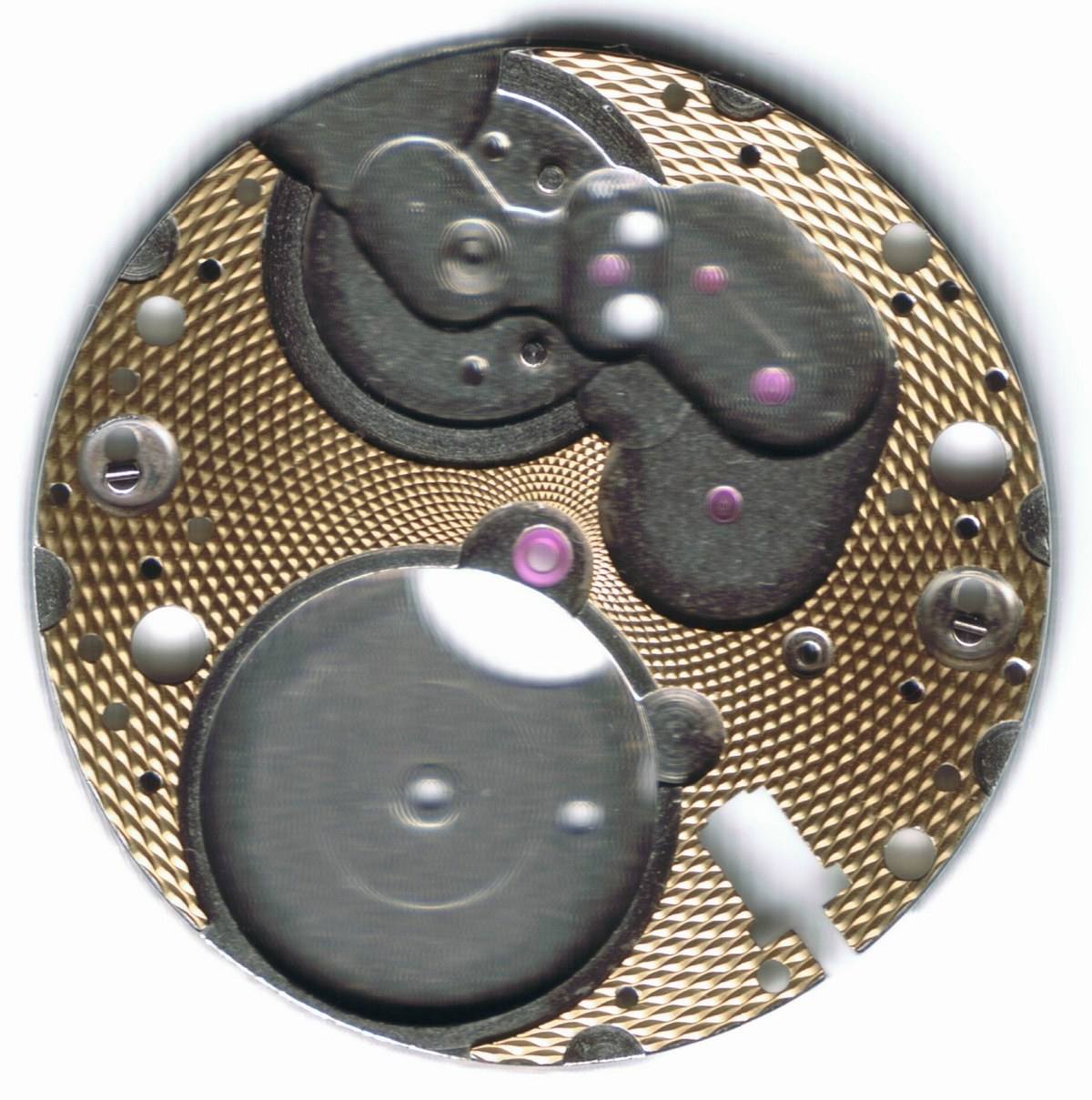
What guilloche offers, beyond beauty, is verifiability. A CNC-milled imitation can approximate the pattern, but the rose engine leaves a signature in the metal: the depth of cut, the way the light breaks across the ridges, tiny irregularities that read as the hand of the operator. Collectors have learned to read those tells the way art buyers read brushwork. In an era when finishing is the most contested ground in watchmaking, and when the GPHG's Artistic Crafts category grows more competitive each year, the engine-turned dial remains one of the few surfaces that cannot be hurried, outsourced to software, or faked convincingly. The machine is old. The honesty is the point.