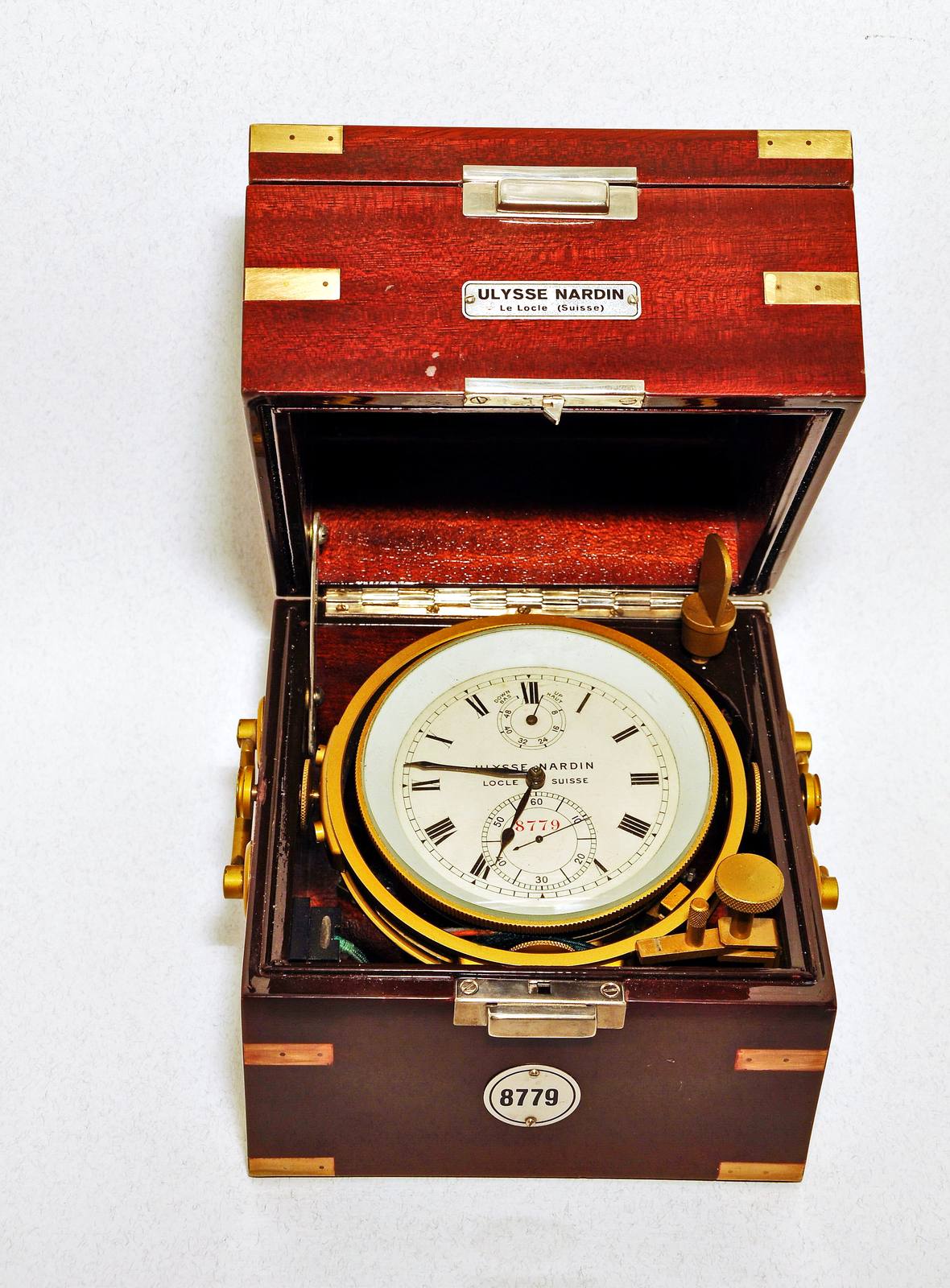
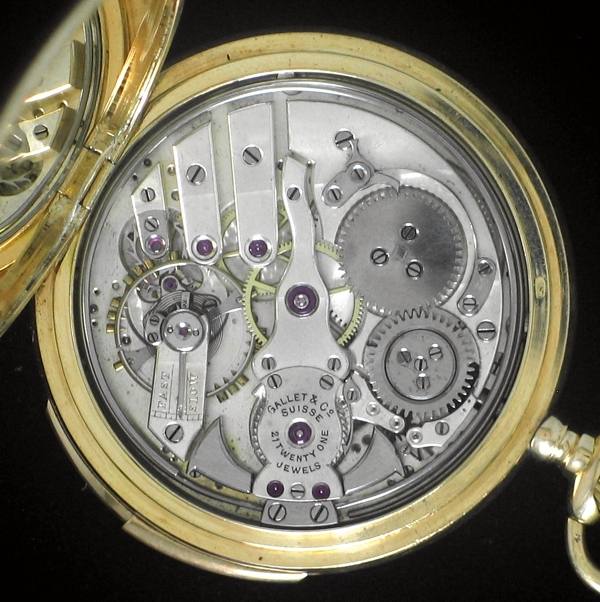
Press the slide on the flank of a minute repeater and you are winding a tiny musical instrument. The slide tensions a spring that drives a strike train, a separate gear train whose only job is to make sound. As it runs, it reads the current time from a series of snail-shaped cams linked to the hands, then lifts and releases two hammers that strike two tuned steel gongs encircling the movement.
The sequence is a code. A low tone sounds the hours, a paired high-low strike sounds the quarters, and a high tone sounds the minutes past the last quarter. Ten past two becomes two low notes, one double note, ten high notes. A quarter repeater stops after the quarters; a minute repeater adds the minutes, resolving time to the nearest sixty seconds. A grande sonnerie goes further, striking the hours and quarters automatically as they pass, like a tiny clock tower on the wrist, with a petite sonnerie mode that chimes only the quarters.
The repeater is one of the oldest complications in watchmaking, developed in the late 17th century so the time could be heard in the dark, long before luminous dials existed. Its difficulty is not the idea but the execution. The gongs must be tuned so their pitch is true, the hammers must strike with exactly enough force, and the whole mechanism, sometimes hundreds of components, must fit inside a wristwatch case whose metal actively shapes the sound. Titanium rings differently from gold; a sapphire caseback changes the acoustics; even the wrist it sits on alters what you hear. This is why repeater collectors talk about watches the way audiophiles talk about speakers: the specification tells you almost nothing, and the ear tells you everything.
Reading a chime
There is a discipline to listening. The hours come first on the low gong, then the quarters as double strikes, then the minutes on the high gong. Experienced listeners count in groups rather than note by note, and they listen for the qualities that separate a good repeater from a great one: the clarity of each strike, the decay of the note, the silence between strikes, the absence of any mechanical chatter from the strike train. A repeater that rushes its sequence sounds anxious; one that spaces its notes sounds confident. The governor, a tiny air brake spinning inside the movement, controls the tempo, and regulating it is one of the watchmaker's most delicate adjustments.
Why 2026 is the year of the chime
Chiming watches were everywhere at Watches and Wonders 2026. Chopard showed the L. U. C Strike One, Armin Strom presented the Minute Repeater Resonance 12:59 First Edition with a world-first '12:59 Anytime' function, and Angelus brought a new quarter repeater: three very different answers to the same complication, from the classical to the experimental. H. Moser exhibited the Endeavour Minute Repeater Cylindrical Tourbillon Skeleton, packing a repeater and a flying tourbillon into a 40mm titanium case around its skeletonised hand-wound calibre HMC 909. Chopard, which won the GPHG's Aiguille d'Or in 2017 with the L. U. C Full Strike, returned to chiming at the highest level with the L. U. C Grand Strike, nominated in the Mechanical Exception category at the GPHG 2026.
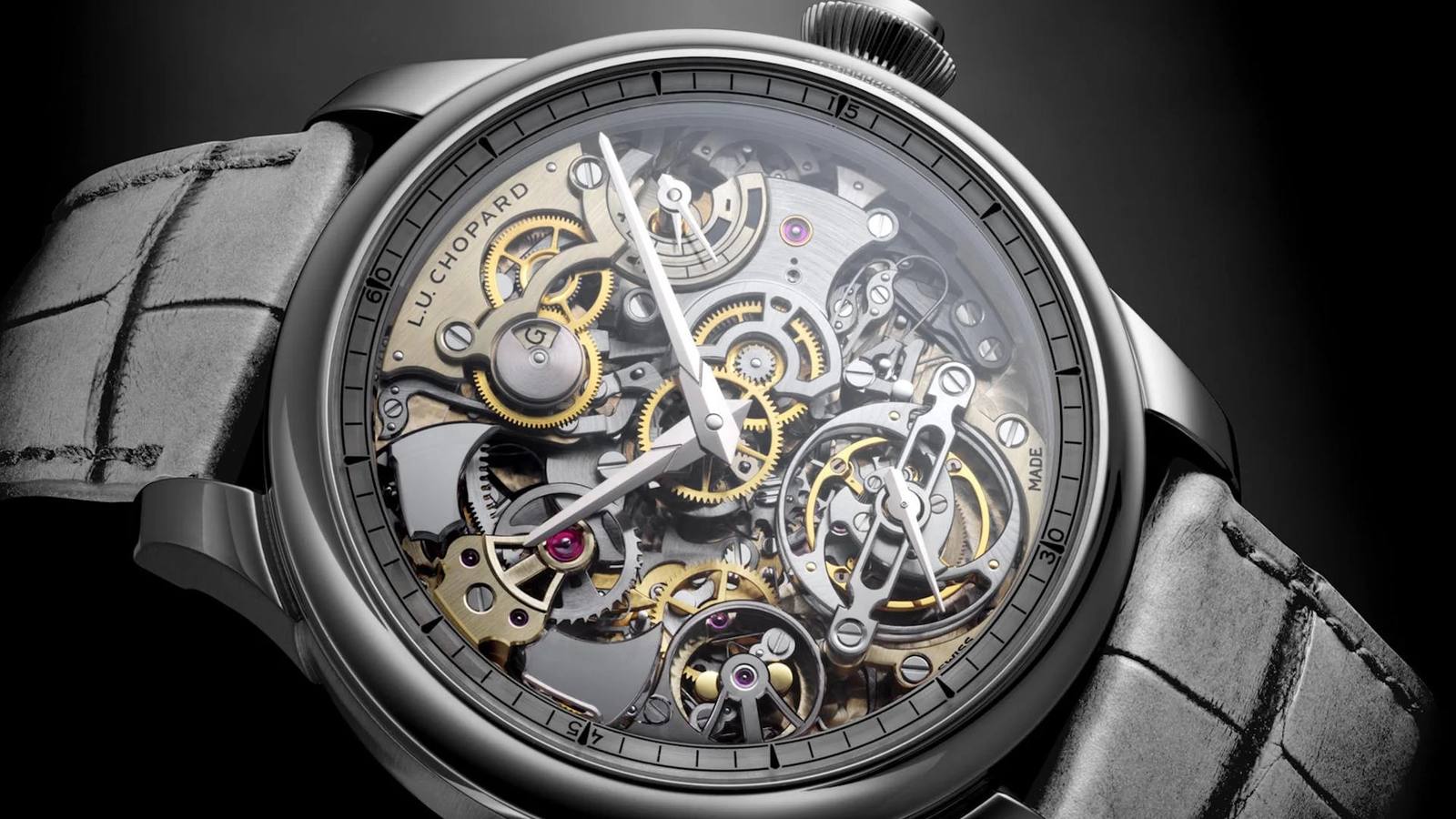
The interest is no accident. A repeater cannot be faked, simplified or approximated: it is either executed to a standard the ear accepts, or it is not. In a market saturated with watches that look complicated, the repeater remains a complication you can verify with your eyes closed. The current generation of chiming watches is also pushing the form forward rather than repeating it, with new gong materials, new case acoustics and new ways of thinking about what a striking watch is for. That is why the best chiming watches of 2026 are being judged the way instruments always are: by how they sound.